A sauna blanket is not a sauna. Get that straight before you spend anything, because most bad infrared sauna blanket setup stories start with somebody expecting a cedar room with a ladle and a bucket. What you actually get is heat therapy on a couch, and the whole experience lives or dies on three things: how evenly the heat lands across your body, whether the thing shuts itself off without your help, and whether the zipper survives month eight.
I have been running heat sessions since 2022, when a shoulder that stalled out after surgery pushed me into buying my first blanket out of pure frustration. That first one died inside a year. Not the heating element. The zipper.
The setup below takes about ten minutes and costs you nothing but a towel and a glass of water. The two blankets I would actually start with are further down.
Why you should trust me
I am a recovery coach in Boulder, Colorado. I work with CrossFit athletes and weekend warriors, and I came into sauna blankets the way most people do, reluctantly, after something else stopped working.
Nine blankets later, I keep a logbook. Core temp estimate, heart rate, session weight loss in grams on a scale that reads to ten grams, and sleep onset the night after every session. I weigh before and after every single one, because sweat volume is the only honest metric in this category. The "detox" language, the calorie claims, the influencer sweat challenges, all of that is marketing. Recovery and sleep have real evidence behind them. Detox does not.
I am not a doctor and this is not medical advice. If you are pregnant, or you have a heart condition, or you take medication that affects your ability to sweat or regulate temperature, that is a conversation for your physician.
What I look for before I recommend any blanket
Four things, in order.
Auto-shutoff and a real timer. A temperature dial without a timer is a burn risk, full stop. I have a scar from a cheap blanket that kept climbing after I dozed off inside it. Any blanket I will recommend has to shut itself off on a timer that I do not have to be conscious to operate.
Zipper quality. The zipper is the most failure-prone part of these products. I have killed two blankets at the zipper and zero at the heating element. A zipper that catches the liner fabric, or one with a pull that snaps in month four, tells you what the rest of the build looks like.
Heat distribution. Even heating matters more than max temperature. A blanket that hits 160°F at the chest and 120°F at the feet is a broken product even if the dial says otherwise. I want construction that suggests the element is spread across the full length, and I stay skeptical of any listing that advertises a peak temperature without saying anything about distribution.
Materials and smell. Some of these off-gas for weeks. If a listing does not tell you what the interior and exterior layers are made of, assume the worst and plan to air it out in a garage for a few days before your first session.
That is the filter. Two blankets clear it at prices a normal person can justify.
The two blankets I would start with
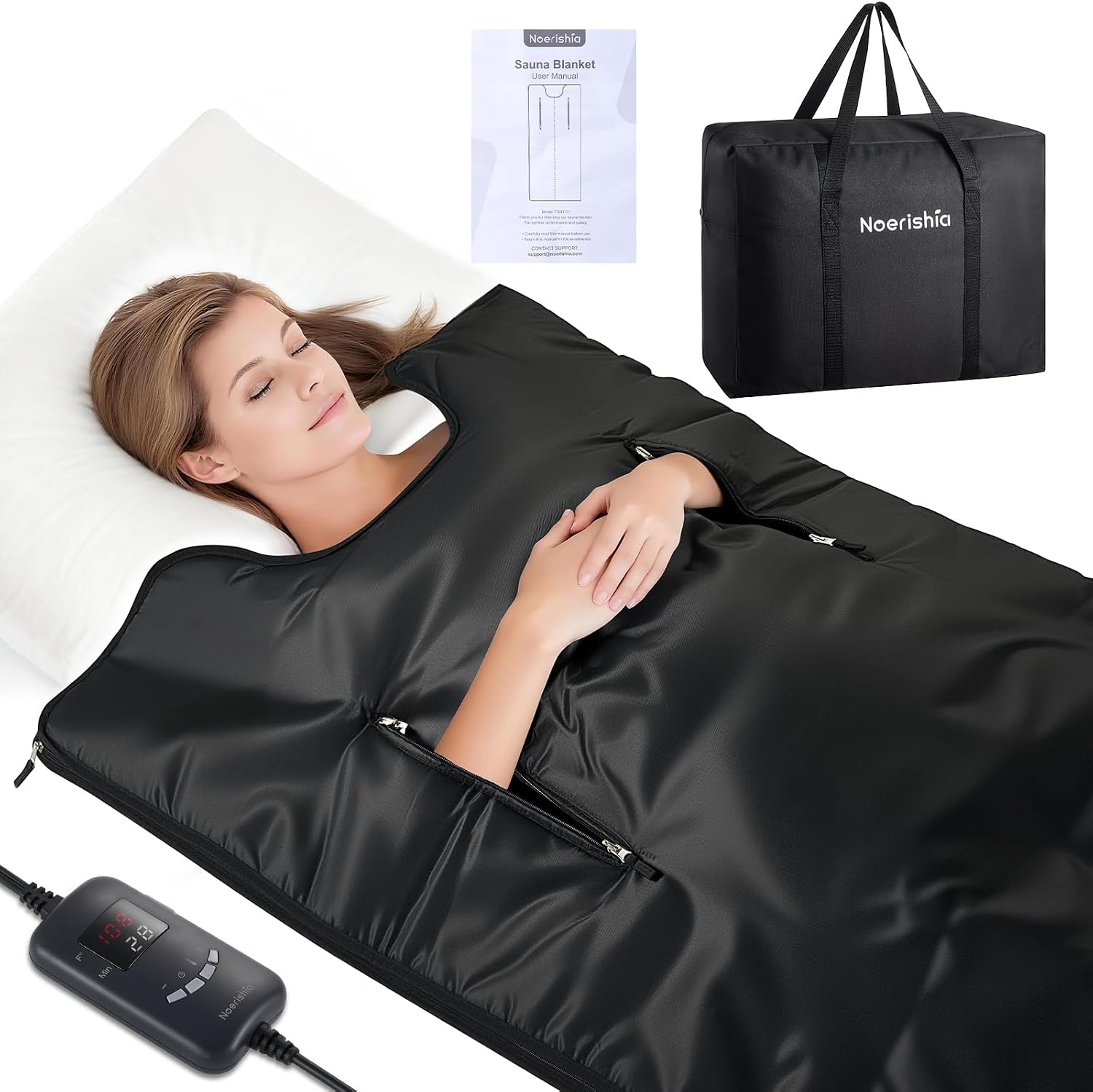
Budget pick: Sauna Blanket for Relaxation and Detox, Versatile Full Body Heating Wrap
 Visit on Amazon →
This is the one I would hand to somebody who wants to find out whether they actually like heat sessions before spending real money. It is a full body wrap, so it covers the whole envelope instead of leaving your feet or shoulders hanging out, and it is built for the relax-and-sweat use case rather than the athlete-running-a-protocol use case.
Ignore the detox in the name. Every blanket in this category carries that word and it means nothing. What matters is that the wrap format gives you an enclosed heat envelope, which is exactly what you want for a couch session where the goal is warming up and winding down rather than chasing a number.
Two things to confirm in the listing before you buy: that the timer is a genuine auto-shutoff and not just a temperature dial, and what the interior layer is made of. If the timer situation is vague, ask the seller directly. A blanket without auto-shutoff is a blanket I would not sit in unsupervised, let alone sleep near.
Flaws but not dealbreakers: At this tier the build will be lighter than the premium stuff, and the zipper is the part I would watch. Treat it gently, do not yank it shut over a bunched liner, and it will outlast the heating element.
Anyone who wants to test the habit before committing, or who wants a second blanket for a guest room, should start here.
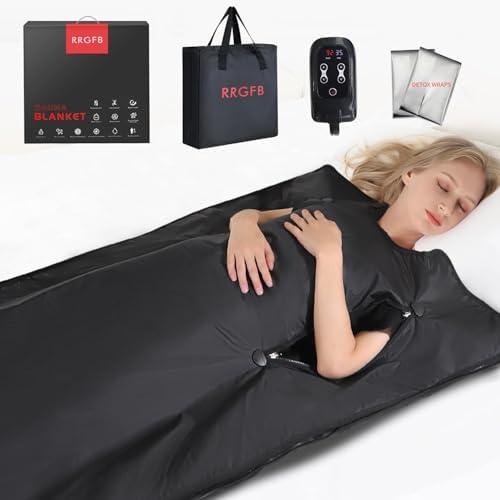
Upgrade pick: Infrared Sauna Blanket for Home Detox, Portable, 6 ft x 2.6 ft
 Visit on Amazon →
The upgrade pick is longer and wider, six feet by two and a half feet, which sounds like a spec sheet detail until you are 5'10" and your feet are jammed against the seam for twenty straight minutes. Length is the difference between a session you repeat four times a week and a session you tolerate twice a month.
This is the one I would point an athlete at. The extra surface area gives the heat more room to spread, and spread is the whole game. A wider blanket also lets you keep your arms inside without folding yourself into a pretzel, and it drapes over the shoulders far more reliably than a narrow wrap does.
Same caveat as above: the detox framing in the name is marketing, not a feature. What you are buying here is size, portability, and a more generous heat envelope. It folds down for storage, which matters if you live somewhere small and do not want a permanent appliance living on your couch.
Flaws but not dealbreakers: A bigger blanket takes longer to come up to temperature, so budget the first several minutes of any session as warm-up rather than counting it as session time. If you log your minutes, log them honestly.
Anyone running sessions four or more times a week, or anyone over about 5'9", should spend the extra here rather than buying a second budget blanket six months from now.
The actual session workflow
This is the part that matters and the part nobody writes down. Here is the order I run, every time.
Step one: Screen yourself. Before your first session, and honestly before every session when you are new: are you dehydrated, hungover, on a new medication, or running a fever? Skip it. Heat therapy is a stressor, and you do not stack stressors.
Step two: Set the space. Blanket on a flat surface, couch or bed or floor mat, never on anything that cannot take heat. Keep a large glass of water within arm's reach and keep your phone outside the blanket. Condensation and electronics do not mix, and once you are zipped in you will not want to reach for it anyway.
Step three: Barrier layer. Put a large towel between you and the interior. It absorbs sweat, protects the liner, and makes cleanup dramatically easier. Some people add a thin cotton sheet underneath. Both are fine. Bare skin directly against a heating element is not fine, especially on a blanket whose surface temperature accuracy you have not verified.
Step four: Weigh in. This is my habit, not a rule. I weigh before and after every session and log the difference. Session weight loss is sweat, not fat, and I treat it as a hydration marker rather than a scoreboard. If you take nothing else from this article, take that framing.
Step five: Dress for it. Light cotton shorts and a t-shirt, plus socks. Socks matter more than people expect because the feet are where heat distribution tends to fail first. No synthetics, no plastic-based activewear. You are not working out, you are sitting in an oven.
Step six: Start lower than you think. First sessions, ten to fifteen minutes at the lowest setting that feels warm. Not hot. Warm. Tolerance builds over two to three weeks, and the people who burn themselves are the people who go straight to the top of the dial on day one.
Step seven: Set the timer before you get in. Not after. Before. Twenty minutes is the standard session once you are acclimated, so set the auto-shutoff for that and then climb in. If a blanket only has a temperature dial and no timer, do not buy it. If you already own one, use a phone timer and never fall asleep.
Step eight: Stay awake. This is the one I would tattoo on people if I could. The burn risk in this category is almost entirely about falling asleep inside a heat source. If your goal is falling asleep in heat, that is a different product conversation and it involves a very reliable auto-shutoff.
Step nine: Exit slowly. Unzip, sit up, wait thirty seconds before standing. Heat plus a sudden position change is how people get dizzy. Drink the water. Let your body temperature come down on its own rather than jumping straight into a cold shower, unless cold is a deliberate part of your protocol, in which case do it on purpose and not by accident.
Step ten: Wipe down and hang. Wipe the interior with a damp cloth according to the manufacturer's instructions, then hang or drape the blanket to dry fully before folding it. Folding a damp blanket is how you get mildew, and mildew is how you get a blanket that smells like a gym bag forever.
Step eleven: Log it. Temperature, duration, how you felt, and how you slept. Six months of that log is worth more than any review, including mine. Your own sleep data will tell you whether this is doing anything for you. Mine says yes. I would still rather you trust your numbers than mine.
Safety caveats and who should skip this
Heat therapy is not for everyone, and no blanket review is a substitute for a doctor's opinion.
Pregnant people, anyone with a heart condition or uncontrolled blood pressure, anyone with neuropathy or reduced sensation in the skin, and anyone on medication that interferes with sweating or temperature regulation should talk to a physician first. So should anyone recovering from a recent injury or surgery, including the kind of shoulder surgery that got me into this.
Do not drink alcohol before a session. Do not run a session if you are already dehydrated. Do not use a blanket on a child. Do not leave a pet alone with a heated blanket plugged in. And do not stack a sauna blanket session on top of a hard training session and expect it to be free recovery; heat is a stressor and it costs something.
I will not make detox claims, and I will not make weight loss claims, because neither holds up. What I will say is that a consistent twenty minute session, four times a week, is the protocol I have run for six months while tracking sleep onset, and that is the specific thing I am still measuring.
What this all costs
The budget wrap is the cheaper of the two and the upgrade blanket costs meaningfully more, which is the normal shape of this category. Neither is a large purchase compared to a gym membership, and both are a fraction of what a real sauna install runs.
The math I actually do is cost per session. A blanket you use four times a week for two years is a lot of sessions, and at that volume the price difference between the two options here stops mattering much. What matters is whether you use it. The most expensive blanket is the one that lives folded in a closet because the setup was annoying or the zipper died.
So if you are unsure, buy the budget wrap, run the eleven steps above for a month, and let your own logbook tell you whether you want the bigger envelope. If you already know you will use it, or you are tall enough that length is a real problem, skip the experiment and go straight to the longer blanket.
That is the whole job. Ten minutes of setup, twenty minutes of heat, a wipe down, and a note in a logbook. The blankets are the easy part. The habit is the work.