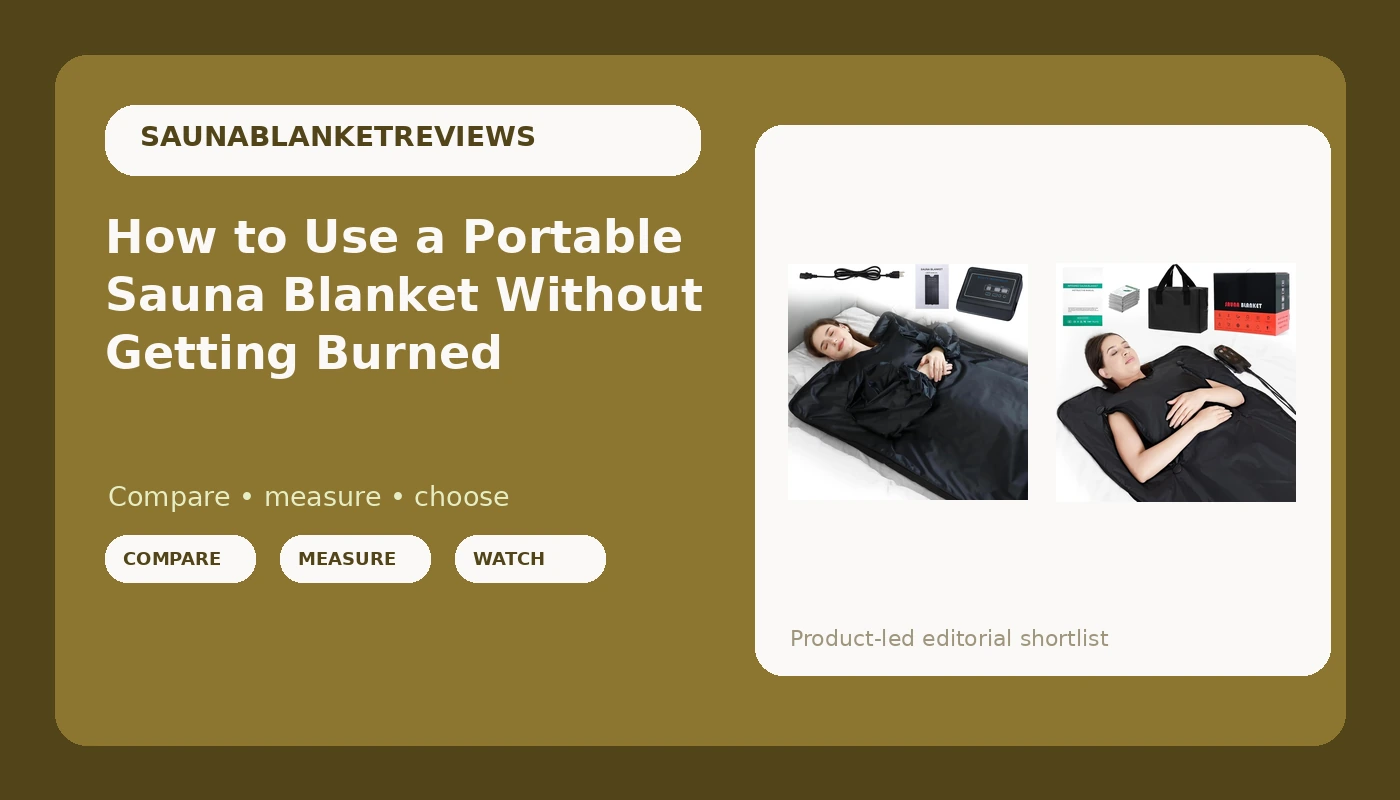
Most people who buy a portable sauna blanket expect a sauna and end up with a heated sleeping bag. That gap is where the angry reviews come from, and it is almost always a setup problem rather than a product problem. I have used a blanket four nights a week since 2022, and the difference between a session that leaves me loose and sleepy and a session that leaves me dizzy and irritable comes down to four things: the temperature you set, how long you stay inside, how much fluid you replace, and whether the heat is even from your chest to your feet.
A portable sauna blanket is heat therapy on your couch. It raises your skin temperature, it makes you sweat, and it buys you a 20 to 40 minute window where your muscles are loose and your nervous system downshifts. That is the whole product. It is not a sauna. It will not detox you and it will not burn fat, no matter what the packaging claims.
What follows is the session protocol I use with clients, the safety rules I will not bend on, and the two blankets I would hand a beginner today.
Why you should trust me
I am a recovery coach in Boulder, Colorado. I swam competitively through my twenties, and now I work mostly with CrossFit athletes and weekend warriors who wreck themselves on Saturday and want to feel human by Monday. I got into heat therapy in 2022 after my own shoulder surgery recovery stalled, and a blanket was the only way to get consistent heat into my schedule.
I have run nine blankets over three years. I keep a logbook with core temp, resting heart rate, session length and sleep onset, and I weigh myself before and after every session so sweat loss is a number in grams instead of a feeling. Two blankets died on me in that stretch. Both at the zipper. Not one heating element has failed. That tells you where the engineering money goes and where it does not.
Affiliate links in this article earn me a small commission. They do not buy a recommendation. Everything below is a blanket I would hand to a client, with the caveats attached.
How I picked and how I tested
I look at five things, in this order.
Heat distribution before maximum temperature. A blanket that hits 160°F at the chest and 120°F at the feet is a broken product, even if the box says 180. Even heat is the entire point of a wrap design. Spec sheets rarely publish distribution data, so I read the construction description: double sided heating, thickness, and whether the manufacturer describes heat zones at all. If the marketing only talks about one max number, that tells me something.
A timer with auto-shutoff. A temperature dial without a timer is a burn risk, full stop. People fall asleep. I have the scar to prove how fast that goes wrong. Both blankets below have a timer, and I would not write about one that did not.
The zipper. The zipper is the most failure prone part of any blanket. It catches fabric, it jams, and when it goes, the blanket is done. Look for a fabric guard behind the teeth and a pull you can work with one hand.
Off-gassing and cleaning. New blankets smell like a factory for a few days. That is normal, but it should fade with airing, and the cleaning instructions should be readable by a human being. Washable or wipeable surfaces make a real difference over a year of frequent use.
Honest claims. "Detox" and weight loss on a box are marketing. Recovery and sleep are the claims with actual evidence behind them, and I will not repeat the other kind.
One honest note: I did not run lab measurements on the two blankets below. What I can tell you is what their published specs say, what those specs mean in practice, and where each one asks you to compromise.
Two blankets worth starting with
Both of these sit in the entry level price band, which is where I tell beginners to start. Spend a season finding out whether you actually use the thing before you spend real money. Here is how they compare.
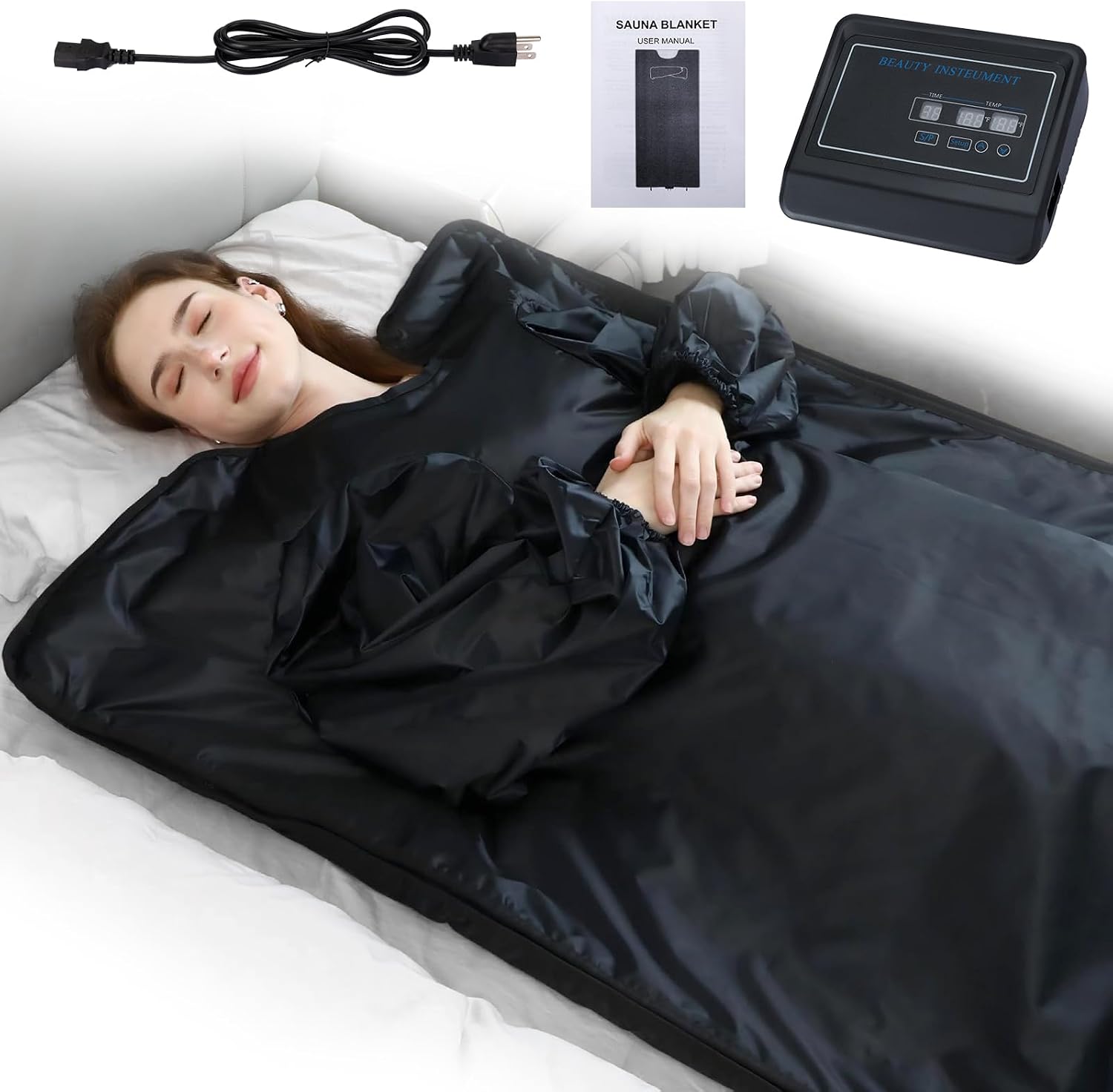
Budget pick: Lcoco&Dream Portable Sauna Blanket for Home, Double Sided Temperature 90-180℉ Temperature,30-90 Minute Timer with Remote, Foldable Washable Design and Storage Bag,6 x 3 FT
 Visit on Amazon →
On paper this is the more flexible of the two. Double sided heating, a temperature range of 90 to 180°F, and a 30 to 90 minute timer with a remote. The 6 x 3 foot footprint is the larger of the pair, which matters if you are tall or if you want to bring your arms inside. It is foldable and washable, and it ships with a storage bag, which sounds like a throwaway until you have a hot blanket draped over a chair in your living room forever.
The remote is the feature I would actually use. Reaching out of a sealed blanket to change a setting at minute 25 is a small annoyance that adds up over a season.
Flaws but not dealbreakers: The timer starts at 30 minutes. That is longer than I want for a first session, and longer than I want for anyone who has never been in a blanket before. You can always unzip early, but a 20 minute floor would be better. Also, 180°F is a number I would never use, and I would treat anyone who does as a burn waiting to happen.
This is the blanket for someone who wants the widest adjustment range and the bigger wrap for the money.
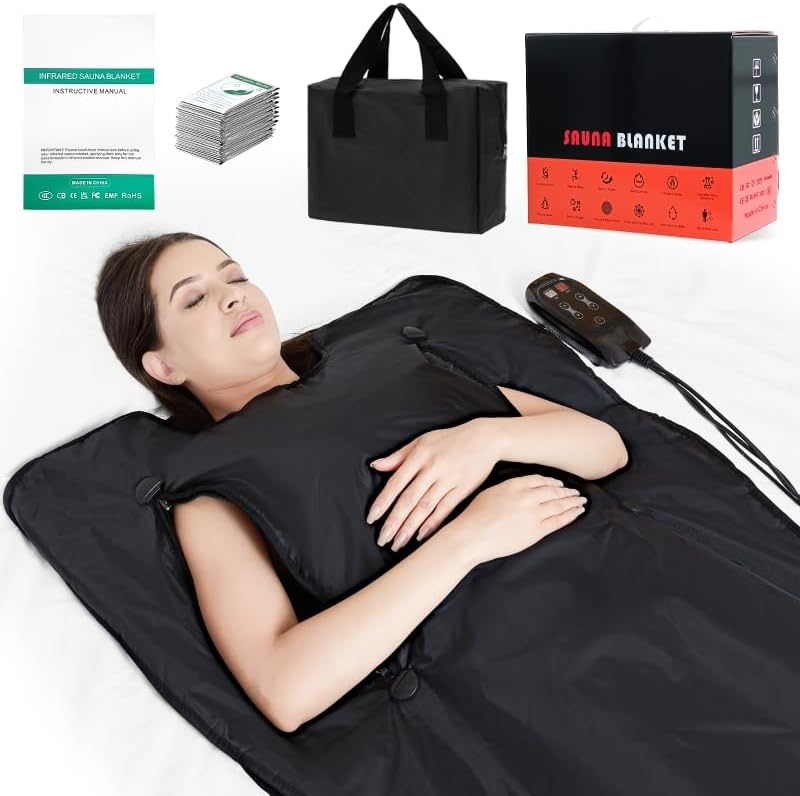
Our pick: Sauna Blanket for Home: Portable Full Body Detox Wrap with Deep Heat Relaxation - Adjustable 86-176°F 20-60 Min Timer Waterproof Foldable Design 71 x 31.5 Inch
 Visit on Amazon →
The word "detox" in the product name is marketing and I want that out of the way first. Ignore it. What is left is a spec sheet that fits my protocol better than the other blanket does: an adjustable range of 86 to 176°F and a 20 to 60 minute timer.
That 20 minute floor is the reason this is my pick. A first session should be 20 minutes. That is long enough to get the sweat response and short enough that you are not testing your own judgment at minute 35. A 60 minute ceiling is plenty for anyone who has built up to longer sessions.
The 71 x 31.5 inch size is slightly smaller than the other blanket, so if you are over six feet, measure yourself before you commit. It is waterproof and foldable, which simplifies the wipe-down routine, and a waterproof layer is what keeps sweat out of the heating elements over time.
Flaws but not dealbreakers: No remote is mentioned in the specs, so changing temperature mid-session means unzipping. There is also no storage bag listed and no washable claim, so plan on a wipe-down routine rather than a machine wash. Those are real tradeoffs against the cheaper blanket.
This is the blanket I would hand to someone whose first priority is running a safe, correctly timed 20 minute session from day one.
The session protocol I use
This works with either blanket. It is also the protocol I give clients, and I have watched it hold up across a few hundred sessions.
Step one: pick your room and your time slot. Bedroom or bathroom, wherever you can be alone and not rushed. Do not run a session in the hour before you need to drive somewhere.
Step two: set the temperature low for session one. If your blanket offers 100 to 120°F, start there. You are not proving anything on day one. You are finding out how your body handles being wrapped in heat for 20 minutes.
Step three: set the timer before you get in. Not after. Before. This is the rule I do not bend on, and it is the reason I will not recommend a blanket without auto-shutoff. On the Lcoco&Dream the floor is 30 minutes, so set it and plan to unzip at 20.
Step four: layer correctly. A thin cotton layer against your skin is more comfortable than bare skin on the surface and it wicks. Have water within arm's reach. Keep your phone outside the blanket.
Step five: get in, seal the zipper, and stay awake. Arms inside or out, whatever feels right. No naps. I know the nap is the fantasy. The nap is also how people get burned.
Step six: 20 minutes, then out. Build to 30 over a few weeks if you want. Some clients settle at 25 minutes four times a week and never move. That is a fine place to land.
Step seven: cool down slowly. Five to ten minutes sitting in the room before a shower. If you are doing contrast work with cold water, that is a separate decision, and it is not where a beginner should start.
Step eight: rehydrate with more than water. You just lost fluid and electrolytes. A pinch of salt in a glass of water or an electrolyte tab is the cheap version. Alcohol before or during a session is a hard no.
Step nine: dry the blanket completely before you fold it. Every time. A blanket folded damp is a blanket that smells like a locker room within a month, and no cleaning instruction on earth fixes that.
Step ten: log it. Temperature, minutes, and how you slept. This is the part nobody does, and it is the only way to know whether the thing is working for you. I weigh before and after, but the scale is optional. The sleep note is not.
Where people get hurt
Heat therapy is not appropriate for everyone, and a blanket makes it easy to overdo because you are comfortable and horizontal. Talk to your doctor before you start if you are pregnant, if you have a heart condition, if you take medication that affects sweating or blood pressure, or if you have diabetes or any condition that dulls sensation in your feet and legs. I refer those clients out. I am a coach, not a physician, and nothing here is medical advice.
The other failure modes are boring and common. Falling asleep inside a blanket. Drinking alcohol first. Running 180°F because the dial goes that high. Standing up too fast into a head rush. Using a blanket with a temperature setting and no timer. Every one of those is avoidable with a rule you set before you get in.
What these blankets will not do
They will not detox you. Your liver and kidneys handle that, and sweat is a rounding error in the process.
They will not make you lose weight. You will weigh less after a session. That number is water, and it comes back the moment you drink, which you should do immediately. I have watched clients celebrate a two pound drop and then eat dinner. The scale is a hydration gauge, not a fat gauge.
They will not replace a real sauna, and they will not replace the ritual of one. This is the honest tradeoff of the category, and I feel it. A dry sauna at a gym is a room you go to with other people. A blanket is a thing you do alone on your couch while your dog watches. What you get in return is convenience and consistency, and twenty minutes at home four times a week beats one sauna visit you never actually schedule.
They will not replace training, sleep hygiene, or a strength program. They are a recovery tool that works best as one input among several.
What this all costs
Both blankets sit in the entry level band, so the question is not really which one is cheaper. It is how many sessions you will actually run before the novelty wears off.
Do the math on your own purchase. Take what you paid, divide it by the number of sessions you realistically run in a year, and you have a cost per session. If you run four sessions a week and keep it up, that number gets small fast. If you run four sessions in January and then the blanket lives in a closet, it was an expensive experiment, which is exactly why I tell beginners to start in this price band instead of the premium tier.
You can check the current price on each product page, and prices move. The numbers that matter more are the timer floor and the heat range, because those determine whether you can actually follow the protocol above.
Buy the blanket with the 20 minute timer floor if you are new. Buy the cheaper one with the wider range if you want the bigger wrap and you are disciplined enough to unzip early. Either way: set the timer before you get in, keep the temperature conservative, drink your electrolytes, and stay awake.
That is the whole job. The blanket does the rest.