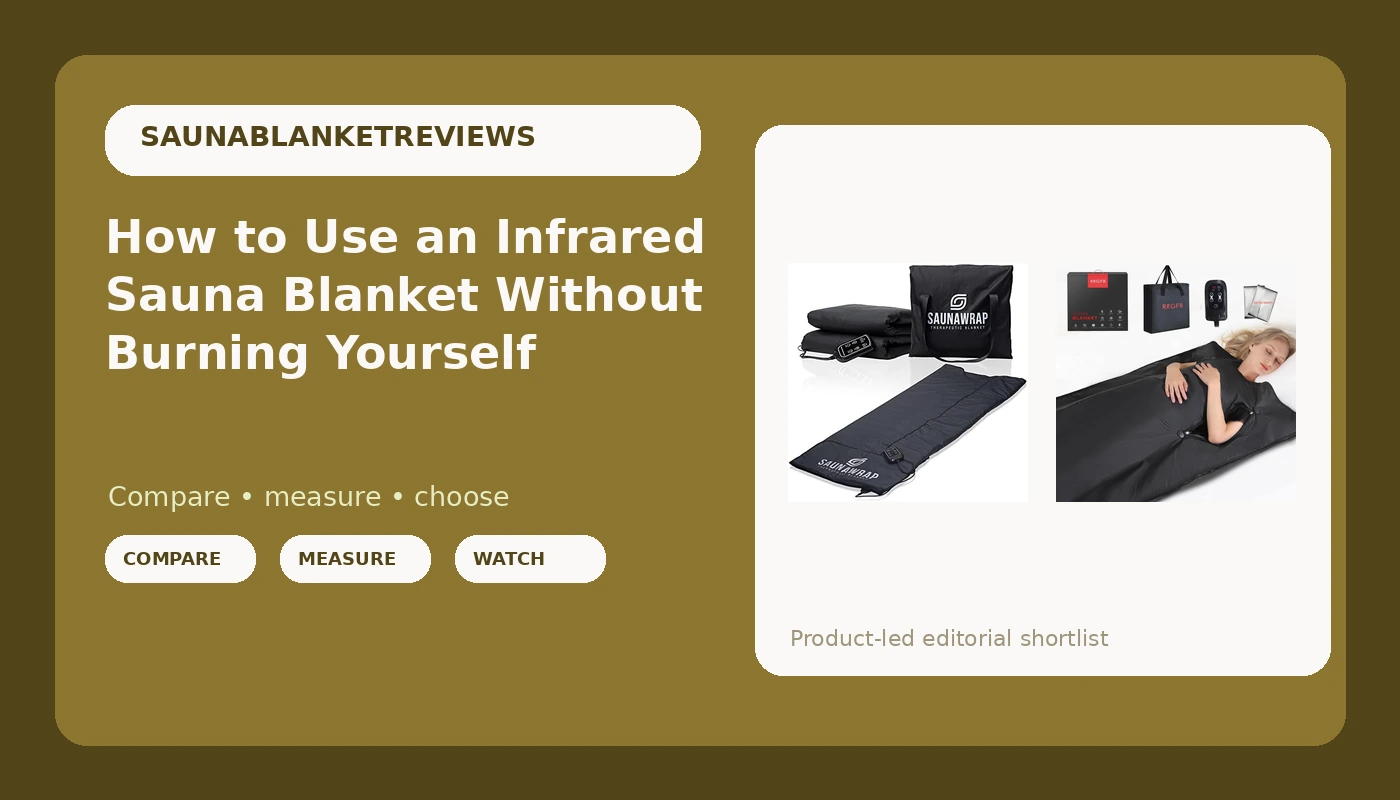
Most people buy an infrared sauna blanket expecting a sauna and get a hot sleeping bag instead. That gap is where the returns come from. The blanket is not a cedar room with a stove and a cold plunge down the hall. It is dry radiant heat you lie inside for 20 to 40 minutes, and when you treat it that way it does three things well: it raises your core temperature, it loosens tissue that has gone stiff, and it makes falling asleep easier on the nights you use it.
I am Tessa, a recovery coach in Boulder, Colorado. I work with CrossFit athletes and weekend warriors, and I started running sauna blanket sessions in 2022 when my own shoulder surgery recovery stalled and I got tired of waiting on it. Since then I have put nine blankets through real use. I weigh myself before and after every session, I keep a logbook with core temp, heart rate, and sleep quality, and I have killed two blankets at the zipper rather than at the heating element.
This is the setup and the session workflow I hand to clients, plus the two blankets in my current kit and where each one belongs.
Why you should trust me
Nine blankets in three years, all of them used by me and by clients in my own recovery room. The zipper fails first, every time, so a new blanket now gets opened and closed 20 times before it goes into rotation. A catching zipper shreds the lining within a month. I do not sell blankets and no brand pays me. I write down what happens in the logbook and I tell clients when a blanket is not worth keeping.
Two boundaries up front. I do not make detox or weight loss claims. Sweat is water and electrolytes, and the number on the scale after a session climbs back the moment you drink. And I do not advise pregnant people or anyone with a heart condition about heat exposure. That is a conversation with a doctor, not with a coach.
How I picked and how I tested
I did not run these two through a laboratory protocol. I ran them through my normal one: the same 20 minute session, the same pre and post weigh in, the same logbook entry, four times a week. What I am judging is not the number a blanket claims on the box. It is how evenly it heats from shoulders to feet, whether the controller holds a temperature instead of cycling hot and cold, whether the timer shuts the blanket off on its own, and whether the zipper still closes smoothly in month six.
The two blankets below are the ones still in rotation. They split cleanly by use case. One is a full length wrap for people who want longer sessions and more coverage. One is the lighter option for a first blanket, a smaller frame, or a guest room.
Two features are non negotiable for me. Auto shutoff, because a temperature dial without a timer is a burn risk, especially for anyone who falls asleep inside the blanket. And a liner that wipes clean, because a blanket you cannot clean is a blanket you stop using.
The blankets worth starting with
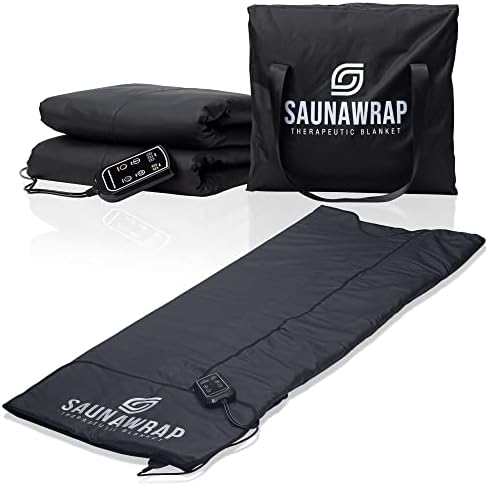
Our pick: SaunaWrap Infrared Sauna Blanket - Personal Sauna for Home Therapy - Portable Full Body Detox - Body Relief and Deeper Sleep - Temperatures up to 176°F - Sweatproof - Easy to Clean - 74” Length
 Visit on Amazon →
This is the blanket I put on athletes, and the 74 inch length is the reason. It runs long enough that a six foot client gets heat past the ankles instead of a cold strip at the feet, which is the failure mode I complain about most in this category. The spec sheet lists temperatures up to 176°F, the highest of the two here, and the sweatproof liner wipes down with a damp cloth in under a minute.
Ignore the word detox in the product name. The parts that hold up are body relief and deeper sleep, and those come from the heat and the session timing, not from anything leaving your body through your skin.
Flaws but not dealbreakers: A full length blanket takes up real space on a bed or couch, and it is heavier to fold than the smaller option below. If you have a narrow couch and no floor space, measure before you order.
Check current Amazon price before you commit, since this one moves.
Anyone who wants one blanket to cover a full body session, including a taller athlete, should start here.
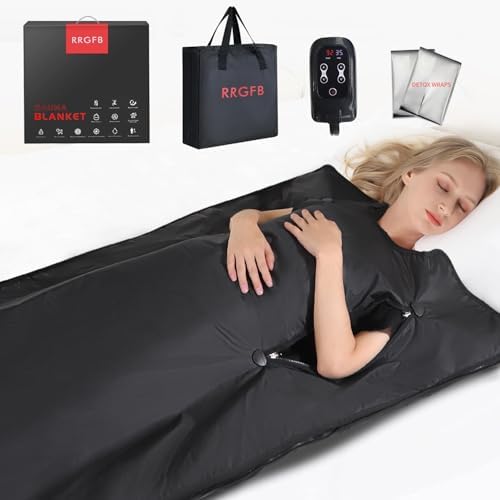
Budget pick: Infrared Sauna Blanket for Home Detox, Portable, 6 ft x 2.6 ft
 Visit on Amazon →
Six feet by 2.6 feet is the smaller footprint, and that is the whole pitch. It stores in less space, it unfolds faster, and it suits a smaller frame or a first blanket you are not sure you will stick with. I use this one for travel and for clients who want to test the habit before spending more.
The trade off is coverage. At six feet it comes up shorter than the SaunaWrap, and on a tall client the feet run cooler than the chest. For a 20 minute session at a moderate setting that is acceptable. For a long, hot session it is not.
Flaws but not dealbreakers: The smaller size means less even heat distribution at the ends. Fold it so the controller sits near your hip, not your head, and keep a towel between you and the liner.
Check current Amazon price on this one too. It is the cheaper entry into the category, which makes it the sensible first blanket.
Anyone under about five foot ten, or anyone shopping for a guest room setup, will get more value here than from a longer blanket.
The actual session workflow
This is the routine I hand to clients. It works on either blanket and it assumes you have a timer and auto shutoff, which you should not buy without.
Step one: Set the surface up before you get in. Blanket flat on a bed or a couch, not bunched, controller within arm's reach so you are not sitting up mid session to adjust it. Lay a towel inside on top of the liner. The towel catches most of the sweat and saves you a full wipe down afterward.
Step two: Weigh in and write it down. I weigh myself before every session. It takes ten seconds and it is the only honest metric in this whole practice, because it tells you whether the session actually produced heat stress or whether you lay in a warm bag for 20 minutes. Log the number, not a feeling.
Step three: Start lower than you think. New users get 20 minutes at the lowest setting the controller offers. Not the middle. Heat adaptation builds in a week or two, and the people who get into trouble are the ones who jump to the top of the dial on day one because a box promised them a sweat.
Step four: Set the timer before the temperature. Timer first, always. If your controller only has a dial and no auto shutoff, that is a burn risk and I would send it back. The timer is what makes a nap inside the blanket survivable.
Step five: Dress for it. Light cotton, or nothing but a towel wrap. Bare skin pressed against a hot panel for 30 minutes is how you get a mark you keep. No lotions or oils before a session, they trap heat against the skin.
Step six: Keep your head out. Shoulders in, head out. You are heating the trunk and legs, not your face. If you feel flushed, dizzy, or your pulse climbing in your throat, open the blanket and sit up.
Step seven: Do not chase the maximum. Even heating matters more than peak temperature. A blanket that runs hot at the chest and cool at the feet is not a better product, it is a worse one. My best sessions are 25 to 30 minutes in the middle of the range, not 45 minutes at the top.
Step eight: Come out slow. Sit up, open the blanket, wait a minute before standing. Drink water with electrolytes, not just water. Give yourself five to ten minutes before a shower, and skip a cold shower immediately after if you are new to heat, because the contrast hits harder than you expect.
Step nine: Weigh out and log the sleep. Weigh yourself after, write the difference, then write down how fast you fell asleep that night. Six months into my own log, that second number is the one that moved.
Step ten: Pick a frequency and hold it. Three to four sessions a week, 20 to 30 minutes, placed inside your recovery window after training. Consistency is what makes the sleep effect show up in the logbook. One heroic 45 minute session on a Sunday does not.
Where people get hurt
I have a scar from a cheap blanket, and it came from falling asleep on a dial with no timer. That is the whole risk in one sentence.
Heat exhaustion is the other one. Alcohol before a session, a hot bath stacked on top, a session run right after a hard training block in August, all of those add up. If you take medication that affects sweating or blood pressure, ask your doctor before you use heat therapy at all. Same for pregnancy and any heart condition. I refer those questions out, every time.
Neuropathy deserves its own line. If you cannot reliably feel heat in your feet or legs, a blanket that runs 176°F at the top of its range is not a good idea, because your skin will not warn you in time.
Cleaning, storage, and the zipper
Wipe the liner after every session with a damp cloth and a little mild soap, then let it air dry fully before you fold it. Never machine wash a blanket with a heating element in it, and never submerge the controller. Most cleaning instructions make this sound harder than it is. Wipe, dry, fold.
Store it flat or loosely rolled. Folding it on the same crease every week is how the internal wiring gets stressed, and a crease that cracks is a blanket that heats unevenly three months later.
The zipper is the part that kills blankets. Zip slowly, hold the fabric clear of the teeth with your free hand, and stop the moment it catches. If it starts catching regularly, a little zipper wax buys you another year. This is why I open and close a new blanket 20 times before I trust it.
What this all costs
I will not quote you a price here, because both of these move and the number you see today is not the number next month. Check the Amazon listing for each blanket and do the math on sessions instead.
A blanket used four times a week for two years is roughly 400 sessions. That is the only cost figure that means anything, and it is why the cheaper blanket in this pair is not automatically the better buy. If the shorter one gets used four times a week, it beats the longer one that sits folded in a closet. If you are tall enough that your feet run cold every session, the cheaper blanket is the one that stops getting used, and that is the most expensive outcome in the category.
Start with the setup that fits your body and your space, run 20 minutes at the lowest setting, and log what happens. The blanket is heat therapy on a couch. Used that way, four times a week, it earns its place in a recovery routine.