Most people who buy an infrared sauna blanket unroll it on the couch, turn the dial to the highest number, climb in, and fall asleep. That is the fastest route to a blanket that smells like a tire fire, a heat rash behind the knees, and a purchase that lives in a closet by February.
A good infrared sauna blanket session is not complicated. It just has an order of operations. You drink water before, not during. You set the timer before you get in, not after you get comfortable. You start lower than you think you need and let the last stretch do the work. And you get out when the timer says so, not when the podcast episode ends.
I run these sessions as a recovery coach in Boulder, Colorado, mostly with CrossFit athletes and weekend warriors who want the recovery window benefit of heat without driving to a studio and sitting in a room with strangers. What follows is the protocol I hand them, and the two blankets I would actually buy for it.
Why you should trust me
I am a former competitive swimmer who got into sauna blankets in 2022, when my shoulder surgery recovery stalled and I was looking for something I could do at home without booking an appointment. Three years later I have tested nine blankets, and I keep a logbook for every session: core temp estimate, heart rate before and after, sleep onset that night, and sweat loss in grams, because I weigh myself before and after each session.
That logbook is why I care about heat distribution more than maximum temperature, and why I will not recommend a blanket without auto-shutoff. I have a scar on my calf from a cheap blanket that had a dial and no timer. I fell asleep. That is a design failure, not a user failure.
I also hold opinions that cost me commissions. The category splits in two: cheap blankets that get hot and die in about eight months, and real ones with weighted construction and even heat. The price gap is the build gap, and the most failure-prone part is the zipper, not the heating element. I have killed two blankets at the zipper.
Two things I will not do: give medical advice to pregnant people or anyone with a heart condition (talk to your doctor, not a blog), and repeat detox or weight loss claims. More on that below.
How I picked and how I tested
I did not test these blankets in a lab. I tested them the way you will use one, on a couch, in a normal room, over months.
The criteria, in order of how much they matter:
Auto-shutoff. Non-negotiable. A blanket that only has a temperature dial is a burn risk, full stop. Every session in my house ends because a timer ended it, not because I remembered.
Heat distribution. Even heat beats maximum heat. A blanket that runs hot at the chest and cool at the feet is a broken product even if the box claims a big number. I pay attention to where I feel heat at the ten minute mark and where I feel it at the twenty minute mark. If the difference is dramatic, the blanket goes in the no pile.
Zipper quality. This is where cheap blankets fail. A zipper that catches fabric starts snagging within a month, and once it snags, the blanket never seals properly and the heat escapes.
Material smell. New blankets off-gas. A little for a few days is normal. A chemical smell that is still there in week three means it never aired out, and you will not use it.
Cleaning. If the cleaning instructions require a PhD, you will not clean it, and a dirty blanket is a smelly blanket. I want something I can wipe down and hang.
Weight and packability. A blanket that is a hassle to store will not get used. This matters more than people admit.
The two blankets I would start with
Both of the blankets below are from LifePro, and they sit at different points in the range. One is the sensible first purchase. One is the one I would buy if I were replacing my daily driver.
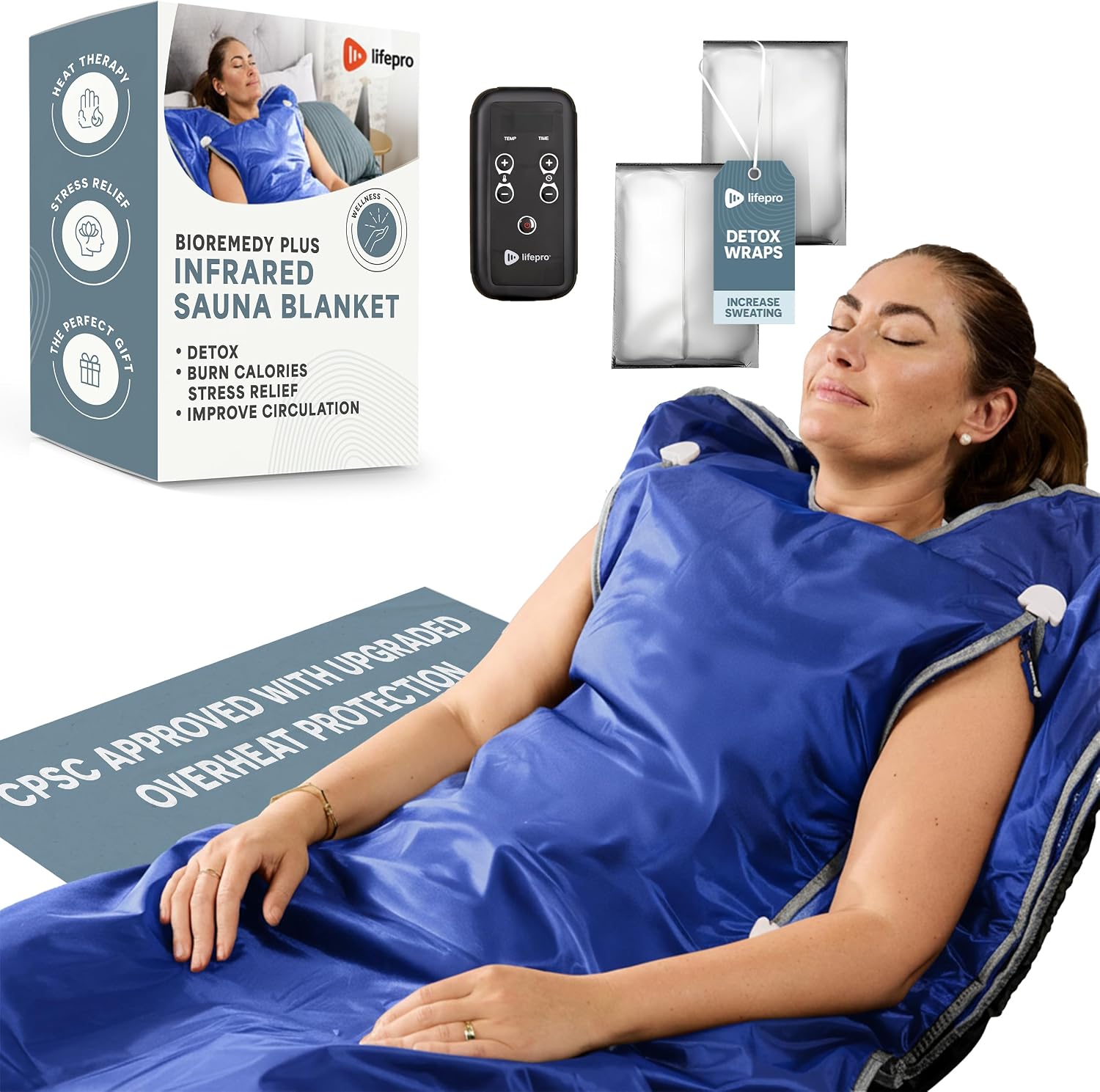
Budget pick: LifePro BioRemedy Infrared Sauna Blanket for Home Relaxation Detox
 Visit on Amazon →
This is the entry point, and for most people reading this, it is the right first blanket. It does the one thing that matters: it gets you into a heat session at home without a studio membership, and it is light enough and simple enough that you will actually unroll it on a weeknight.
I want to be direct about the name. The word detox in the product title is marketing, and I do not repeat detox claims. Sweat is water and electrolytes. Your liver and kidneys do the clearing. What heat therapy gives you is a temporary rise in core temp, a recovery window where your muscles feel looser, and for a lot of people, a genuinely easier time falling asleep afterward. Those are the reasons to buy this, and they are good reasons.
If you are new to heat, this is also the safer place to start, because it is easier to run shorter, cooler sessions and build a tolerance. Start at a low setting, stay 15 to 20 minutes, and see how you sleep. If your sleep onset improves and your legs feel better the next morning, you have your answer. If you feel dizzy, you went too hot or too long, and you need to back both down.
Flaws but not dealbreakers: As with most blankets in the entry tier, the zipper is the part to watch. Do not yank it. Guide the fabric away from the teeth with your free hand every single time, and it will last far longer. Give it a few days to air out before the first session.
Anyone who wants to try heat therapy without a big commitment, or who wants a second blanket for a guest room, should start here.
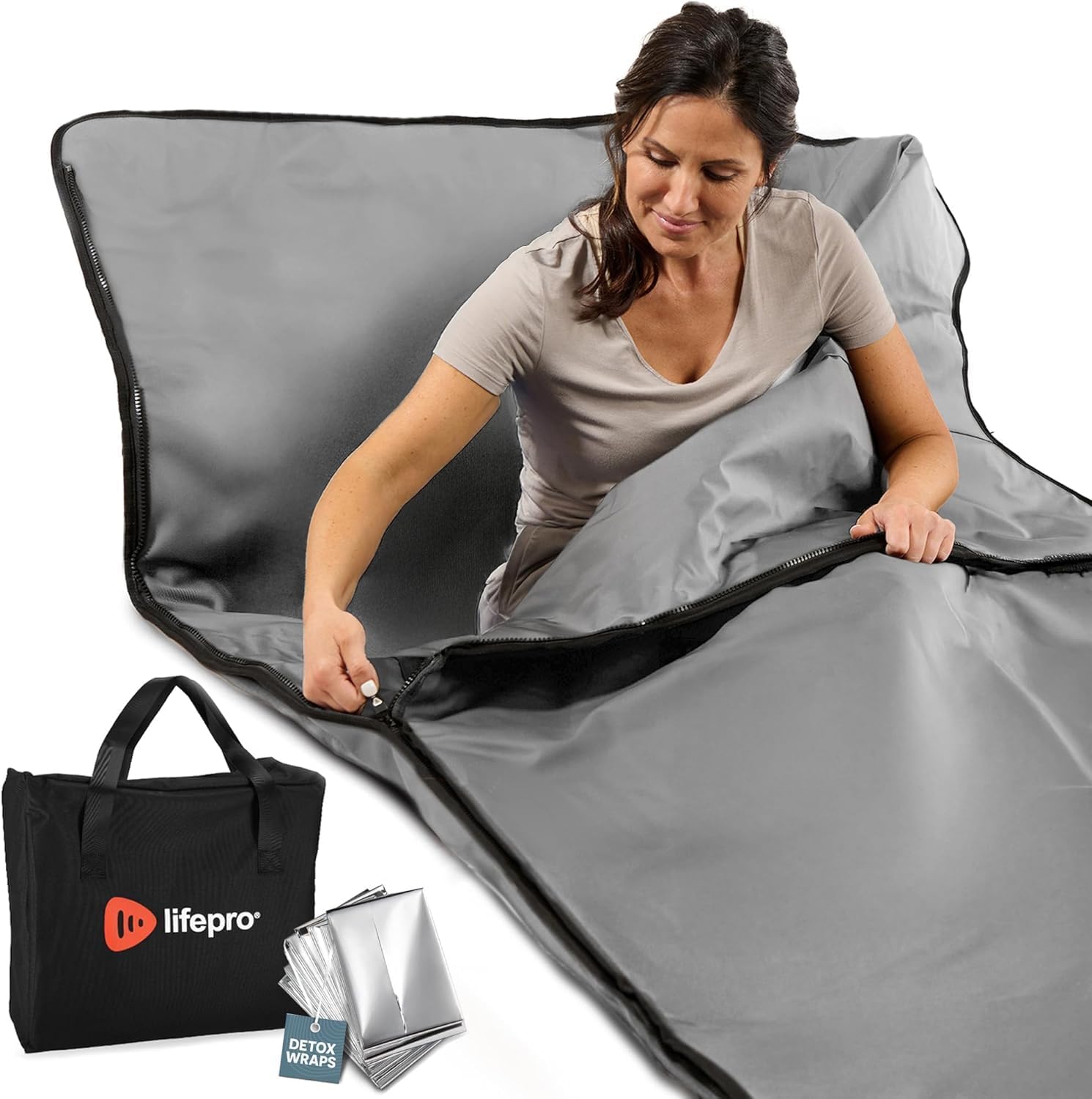
Our pick: LifePro RejuvaWrap Infrared Sauna Blanket with Low EMF and 9 Temp Levels
 Visit on Amazon →
This is the one I reach for when I want a real session rather than a quick warm up. Nine temperature levels matter more than they sound, because the difference between a session you can tolerate at 15 minutes and one you can tolerate at 30 minutes is usually a few degrees, not a few positions on a dial that only has three settings. Having granular steps means you can find your number and repeat it, which is the entire point of a protocol.
The low EMF construction is the other reason I point people here. I am not going to pretend EMF is the health crisis some marketing implies, but lower field output is a reasonable thing to want when you are wrapped in a heated electrical device for half an hour several times a week, and it usually signals a more carefully built blanket overall, including the wiring and the controller.
In practice, the sessions I get from this blanket are the ones that feel evenly heated from shoulders to ankles. That evenness is what lets me stay in longer, and longer sessions are where the recovery benefit shows up in my logbook as better sleep onset.
Flaws but not dealbreakers: It costs meaningfully more, and it is heavier to store. If you have a small apartment and nowhere to hang a folded blanket, that matters. It is also still a blanket, not a sauna. If you want the ritual of a cedar room, steam, and a cold plunge, buy a membership instead.
Anyone who has already decided heat therapy works for them and wants one blanket to use four times a week for years should look here first.
The actual session workflow
This is the part that determines whether the blanket helps you or just makes you sweaty and annoyed.
Step one: Hydrate before, not during. Drink a glass or two of water in the hour before your session. Drinking while wrapped in a heated blanket is a mess, and you do not need it. Have water waiting for when you get out.
Step two: Set up the surface. Lay the blanket flat on a couch, a bed, or a mat. You want a surface that will not trap heat underneath you, and you want a towel inside the blanket where you will lie. The towel keeps the blanket clean and keeps you from sticking to the liner.
Step three: Program the timer first. Before you get in, set the session length. Start with 15 to 20 minutes and set the temperature low. Auto-shutoff is the safety net, not the plan, so plan to get out before it fires.
Step four: Get in and close the zipper slowly. Guide the fabric clear of the teeth as you close it. This single habit determines how long your blanket lasts.
Step five: Start the clock and stay still. Movement inside a sauna blanket dumps heat and makes you fidget. Lie still, breathe normally, and let the heat build. The first five minutes feel like nothing. That is normal. Do not turn the dial up yet.
Step six: Reassess at the halfway point. If you are comfortable and not lightheaded, stay the course. If you are sweating hard and your heart rate is up more than you expected, end the session early. There is no prize for finishing.
Step seven: Get out when the timer says. Not when the episode ends. Open the blanket and let it air while you cool down, and stand up slowly. Dizziness on standing is the most common complaint I hear, and it is almost always from getting up too fast after a hot session.
Step eight: Wipe down and hang. Wipe the liner per the instructions, let the blanket air fully before you fold it, and store it somewhere it can breathe. A blanket folded damp is a blanket that smells.
Step nine: Log it. Write down the temperature, the duration, and how you slept. Two weeks of that log will tell you more about your ideal session than any review, including this one.
What the marketing gets right and wrong
Detox: wrong. Your body clears waste through your liver and kidneys. Sweat is water and salt.
Weight loss: wrong. You will weigh less immediately after a session because you sweat out water. That is session weight loss, and it comes back the moment you drink. I weigh myself before and after every session, and I have never once pretended that number was fat.
Recovery: mostly right, with a caveat. Heat raises core temp, blood flow increases, and most people feel looser afterward. The evidence for heat and muscle recovery is decent. It is thinner than the marketing implies, and I say that as someone who sells the recovery benefits confidently.
Sleep: the most interesting one. In my own log, 20 minute sessions four times a week in the early evening line up with faster sleep onset. That is a self-experiment with one subject, not a study, but it is the reason I keep doing this.
Heat shock proteins: real biology, and a fair reason to be curious about heat therapy. It is also a phrase that gets attached to a lot of claims that have nothing to do with it.
What this actually costs you
The two blankets sit at different points in the range, so check current Amazon price for each rather than trusting a number you read somewhere. The real cost of this habit is not the blanket. It is the 20 to 30 minutes, four times a week, and the discipline to keep the temperature lower than your ego wants.
Spread over two years of regular use, either blanket costs less per session than a single drop in class at most studios. That math is easy. The harder part is the routine: towel down, timer set, phone out of reach, out when the timer says.
Do that for a month and you will know whether heat therapy belongs in your recovery week. If it does, the blanket pays for itself in convenience alone. If it does not, you will know that too, and you will have spent far less than a year of studio memberships finding out.