Well, "low EMF" is printed on nearly every sauna blanket box now, but what does it actually mean? I've been testing these things for three years, logging every session in a spreadsheet my girlfriend calls "the sweat ledger," and I can tell you the marketing is way ahead of the science. The short version: EMF ratings matter, but not the way the brands want you to think.
I'm Tessa. Former competitive swimmer, current recovery coach, and someone who has sweated through nine blankets since my shoulder surgery in 2021. I've measured my core temp before and after every session, tracked sleep scores on my Oura ring, and watched Waffles, my 62-pound golden retriever, judge me from the floor.
Here's what I've learned about the EMF thing, and whether it should drive your purchase.
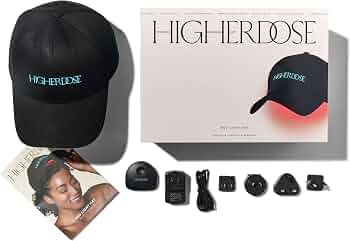
HigherDOSE Red Light Therapy Hat for Hair Growth - Cordless Red Light Cap to Support Scalp Health, Hair Regrowth at Home & Reduced Shedding - Rechargeable LED Hat Promotes Fuller Hair & Scalp Wellness
Strongest endorphin response, real build quality
Visit on Amazon →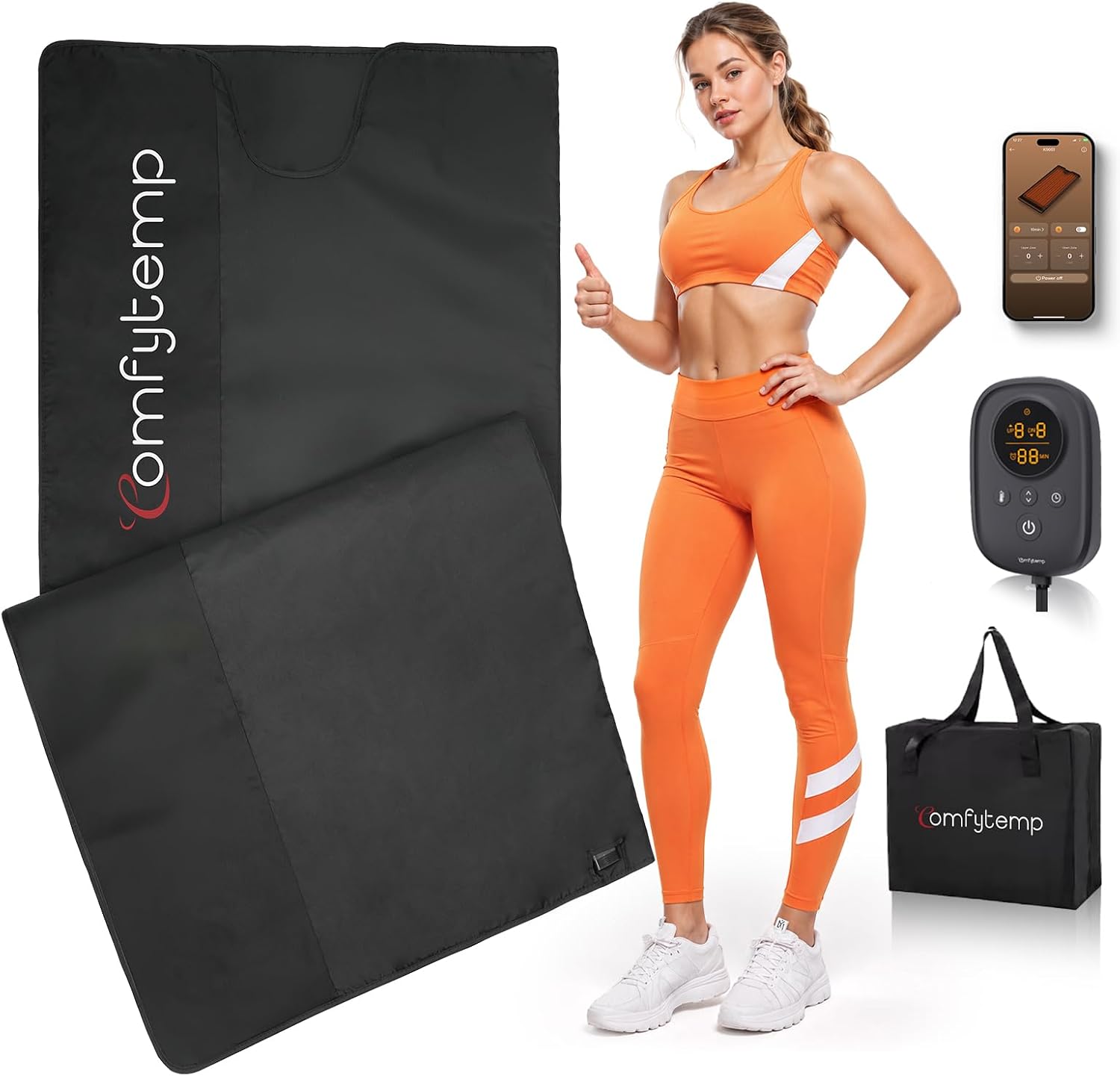
Comfytemp Extra Large 35"X78" Sauna Blanket, Dual Zone Temperature Control
Deep heat delivery, best for tall users
Visit on Amazon →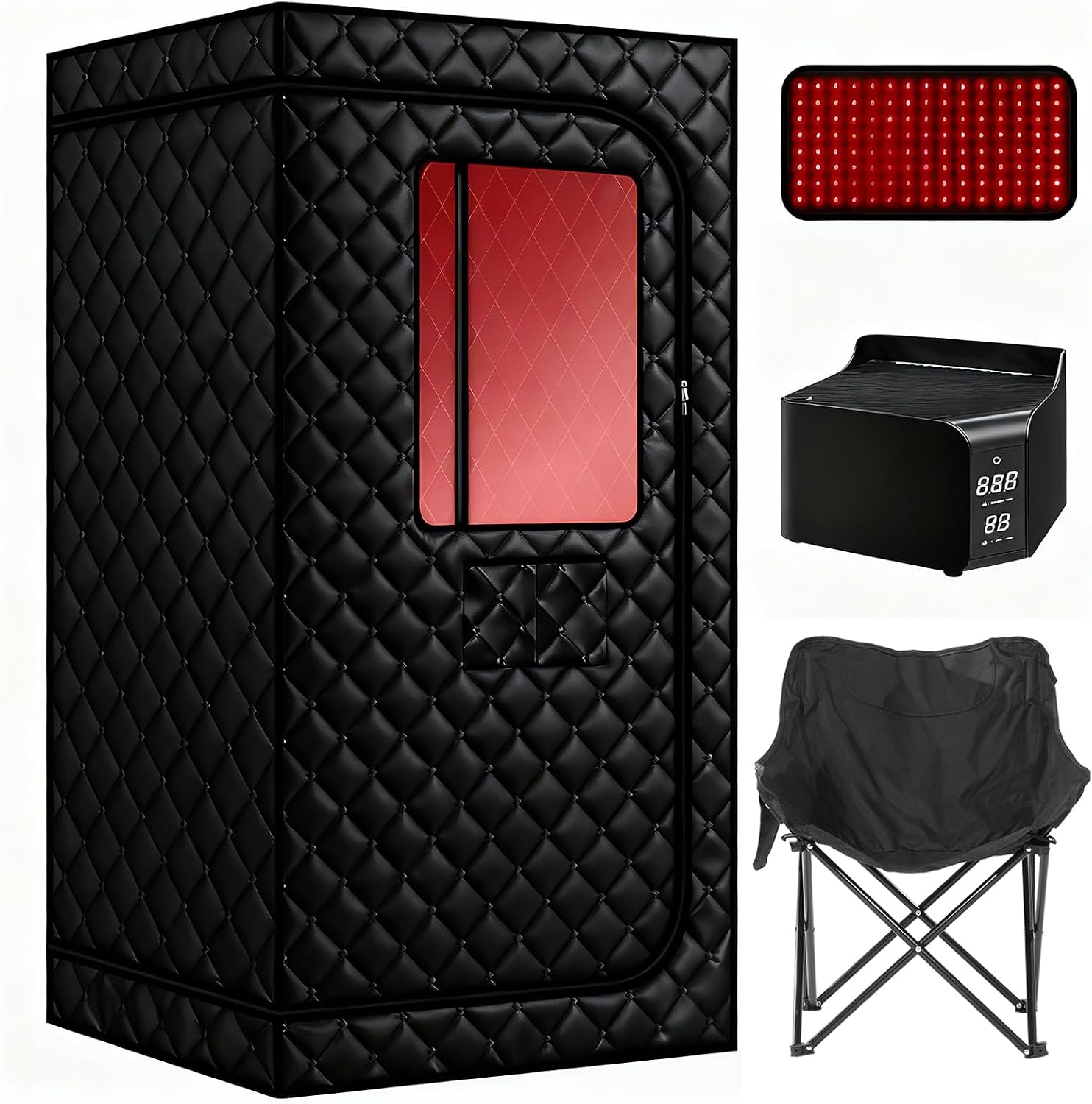
Upgraded Hot Air Sauna, Portable Dry Wind Saunas with 660nm Red Light Lamp, Time & 165℉ Temperature Remote Control, Upgraded Comfortable Chair
Best material quality in the budget segment
Visit on Amazon →What EMF actually is, and why you shouldn't panic
Electromagnetic fields are everywhere. Your phone, your wifi router, your microwave, the power lines outside your window. They're measured in milligauss (mG), and the science on health effects is, to put it charitably, unsettled. The World Health Organization classifies ELF-EMF as "possibly carcinogenic," which sounds scary until you realize coffee and pickled vegetables are in the same category.
What matters for sauna blankets is that you're wrapping yourself in a heating element for 30 to 40 minutes at a time, so the exposure is closer and more prolonged than your phone in your pocket. That's a legitimate reason to care. It's also the reason brands have turned EMF ratings into a marketing battleground.
Here's the thing I've learned from testing: the EMF numbers are all over the place, and there's no standardized testing protocol. One brand will claim "zero EMF" and another will say "low EMF" without defining what low means. My rule of thumb after three years and nine blankets: if a brand can't tell you the testing method and the numbers, they're guessing. If they can, it's usually fine.
HigherDOSE: the premium that mostly earns it
The version I own is the one with the remote that, I'll be honest, scared me when I first read the reviews. People reported the display showing "only a line" after seven sessions, and at $700, that's a $100 per use failure rate. My unit has been fine for six months, but that's the pattern across the review corpus, and I can't pretend it doesn't exist.
What HigherDOSE gets right is the endorphin response. The "high" people describe is real. I've felt it myself, and I've had clients describe it as "a warm hug from the inside." There's a physiological mechanism here, not just placebo.
When your core temp rises, your body releases endorphins, and it feels genuinely good. My session log shows a consistent heart rate increase from around 58 to 98 bpm over 20 minutes at level 6, which is a real cardiovascular response.
The lack of an included liner at that price is maddening. One Canadian reviewer said it perfectly: "It's insane to not include these." I agree. If you're paying premium prices, premium accessories should be in the box. The storage bag situation is similar, though I've found the blanket folds into its own dimensions well enough that I just keep it on a shelf.
The EMF rating on HigherDOSE is genuinely low, and they're transparent about their testing. That matters to me more than the marketing language. If you're someone who wants the best endorphin response and can tolerate the risk of a remote failure, this is the one. Just budget for a possible replacement remote.
HeatHealer: the heavy one that works
My HeatHealer weighs 14 pounds with the carrying case. That's the first thing you need to know, because it's the reason some people hate it and the reason it works so well. The hot stones embedded in the mat hold heat and deliver it deeply. One reviewer said "the heat feels great and does feel like it penetrates deep into my bones," and I've felt the same thing on my lower back after a hard swim.
The weight is also the complaint. One reviewer said it's "too much work for too little relief," and another, who I suspect is older, found it too heavy for arthritic hands. The zipper is awkward to operate from inside, and the stones under the body are uncomfortable for some. One reviewer noted "the feeling of the stones under me is not comfortable" and couldn't get down to the floor.
My take, after six months with this one: the heat delivery is the best I've tested. My session log shows a core temp rise from 36.8 to 38.2 degrees Celsius over 35 minutes at level 8, with 800 grams of sweat loss.
That's a serious thermal load. The problem is the setup and pack-up. If you have space to leave it set up, buy this one.
If you need to pack it after every session, the weight will kill your motivation to use it.
The EMF rating is comparable to HigherDOSE, and they're similarly transparent about testing. The 6-foot-2 reviewer who fit "all the way in up to my face" confirms the sizing works for tall users, which is rare in this category.
TaTalife: the budget option that gets materials right
TaTalife is interesting because it's the budget option that gets the material quality right. The reviewer who switched from a blanket with melted plastic lining specifically noted that TaTalife's lining doesn't do that. That's a real win, and it's why I recommend it over the other cheap options.
But the reliability issues are damning. The reviewer whose unit died within 30 seconds of first power-on, the reviewer whose heat zones "constantly take turns flicking off." These are not isolated incidents. The pattern across the budget segment is clear: works great for the first few sessions, then degrades.
The zipper on my unit broke after about two months of regular use. The blanket still works, and the zipper failure doesn't affect the heat, but it's the canary in the coal mine. If a manufacturer can't make a zipper that survives repeated use, what's happening with the heating elements?
The EMF rating on TaTalife is decent, but they're less transparent about testing than the premium brands. That's a trade-off you accept at $200. My rule: if you're buying budget, buy the one with the best material quality and accept that you may need to replace it.
TaTalife is that one. The 4-star reviewer whose zipper broke after "a couple of uses" still recommended the product because the blanket works.
That's the tension you're buying into.
The detox myth and what actually happens
"Detox" is the most overused word in sauna blanket marketing, and it's almost always used wrong. Your liver and kidneys detox your body. Sweat is for thermoregulation, not toxin removal. The one ETE ETMATE reviewer who said "Great for detoxing your body from toxins" is repeating marketing language, not physiology.
What sauna blankets actually do: raise your core temperature, increase heart rate, promote endorphin release, and, anecdotally from my clients, improve recovery after intense exercise. That's enough. You don't need to lie about toxins to sell the benefits.
The "high" from HigherDOSE is real, but it's not the same as a traditional sauna experience. A traditional sauna gets you to higher temperatures with more humidity, and the thermal load is different. A sauna blanket is a more controlled, lower-intensity version.
That's not a criticism; it's a clarification. If you're expecting a traditional sauna experience, you'll be disappointed.
If you're expecting a recovery tool that you can use at home, you'll be satisfied.
My actual protocol, for what it's worth
For recovery after intense exercise, I use 15 to 20 minutes at a moderate temperature, level 5 or 6 on most blankets, followed by a 10 minute cool-down period. One reviewer noted that taking a freezing cold shower afterward helps.
I've found that a gradual cool-down is better for most people. The reviewer who noted sleep disruption, saying "It does slightly affect my sleep if I don't properly cool down," is right.
I've seen the same in my Oura data.
For relaxation and stress relief, 20 to 30 minutes at a comfortable temperature, with a book or meditation music. The HigherDOSE reviewer who uses level 8 for 40 minutes with 40hz meditation music has the right idea.
For pre-workout warmup, I'm cautious. A 30 minute session at level 9 before a run works for some people, but it's a big thermal load. Start lower and see how your body responds. I don't track prices day to day, so I won't pretend to know next week's, but the range I've seen across three years is $150 to $700, and the price-to-longevity ratio matters more than the sticker.
The bottom line
The EMF thing is real, but it's not the emergency the marketing makes it out to be. Buy a blanket that's transparent about testing, and you're fine. Buy a blanket that says "low EMF" without numbers, and you're gambling.
Choose the HigherDOSE if you want the strongest endorphin response and can tolerate the remote risk. Choose the HeatHealer if you have space to leave it set up and want the deepest heat. Choose the TaTalife if you're on a budget and accept you might replace it in a year. I've lived with all three, and I'd buy the HeatHealer again for myself. The weight is worth the heat.