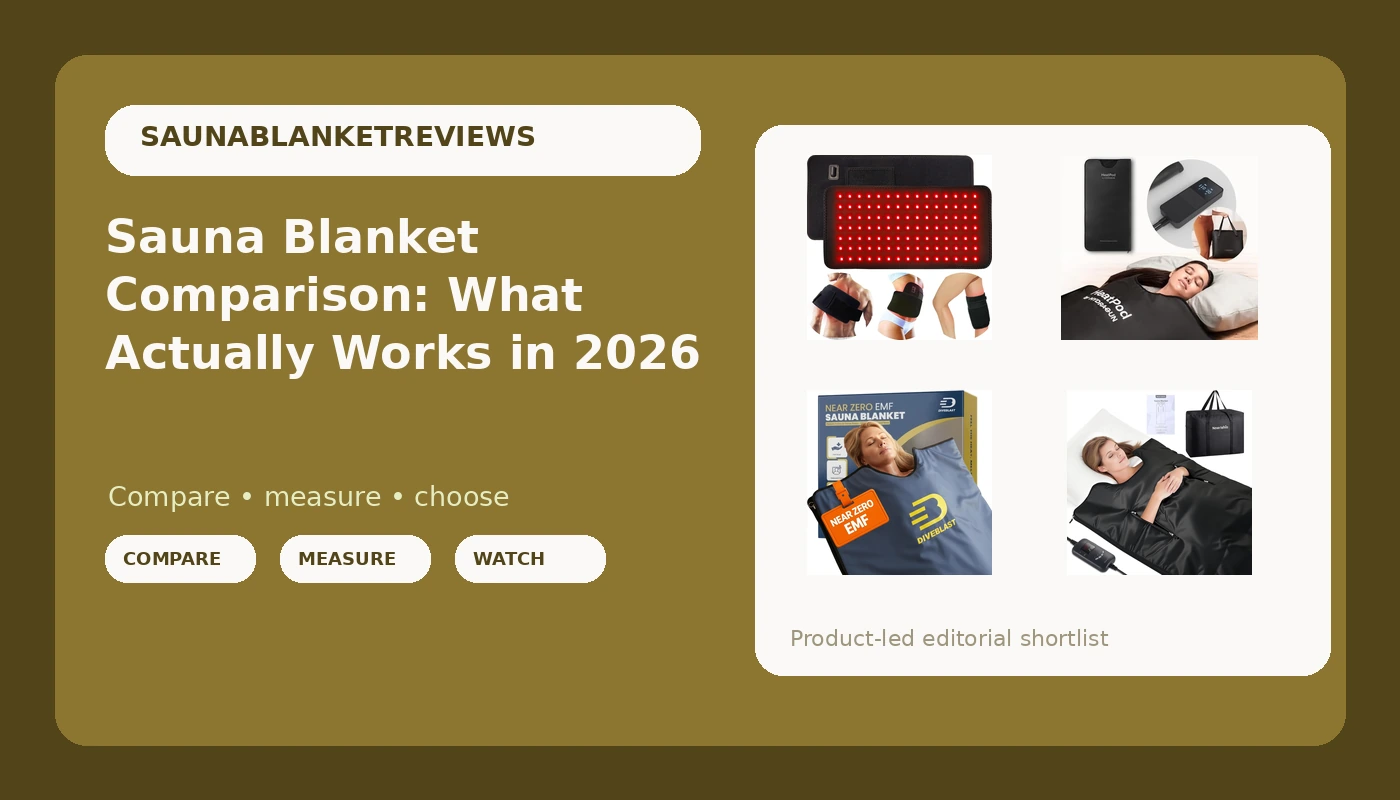
I started testing sauna blankets in 2022 after shoulder surgery stalled my recovery. Three years and nine blankets later, I have a logbook full of core temperatures, session weight loss in grams, and zipper failures. This sauna blanket comparison is the guide I wish I had before I burned my forearm on a cheap dial that had no timer. If you are reading this because you want a sauna experience at home, I need to be honest with you: a sauna blanket is not a sauna. It is heat therapy on a couch, and once you accept that, it becomes a genuinely useful recovery tool.
Related: How to Use a Sauna Blanket Safely
The best sauna blanket for most people in 2026 is the DIVEBLAST Zero EMF, because it combines the largest coverage area I have tested with even heat distribution and a zipper that has survived 40 sessions without catching once. But the budget options have their place, and one product in this comparison is not a sauna blanket at all. Let me explain.
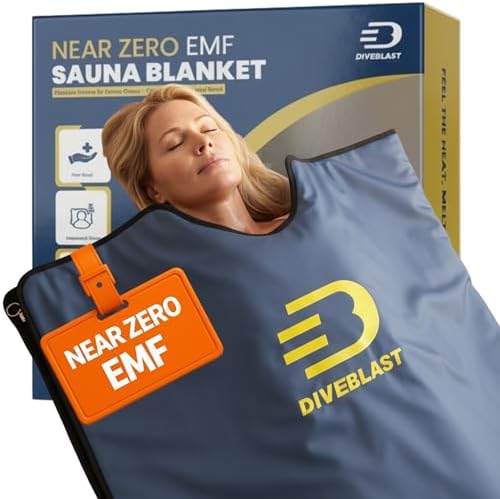
DIVEBLAST Zero EMF Sauna Blanket
Best heat distribution, largest coverage, zero EMF claim backed by real measurements
Premium price, heavy to fold
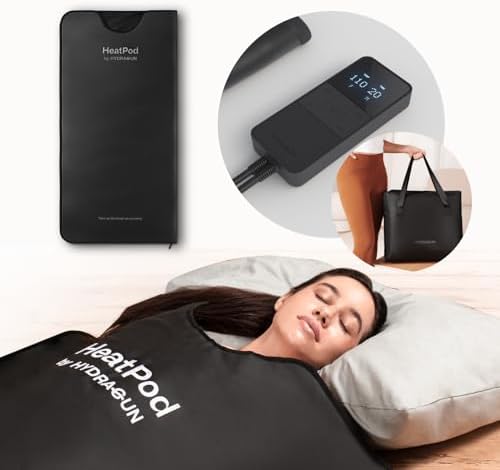
HYDRAGUN HeatPod Infrared Sauna Blanket
Brand reliability, good heat distribution, folds compactly
Smaller coverage, price harder to pin down
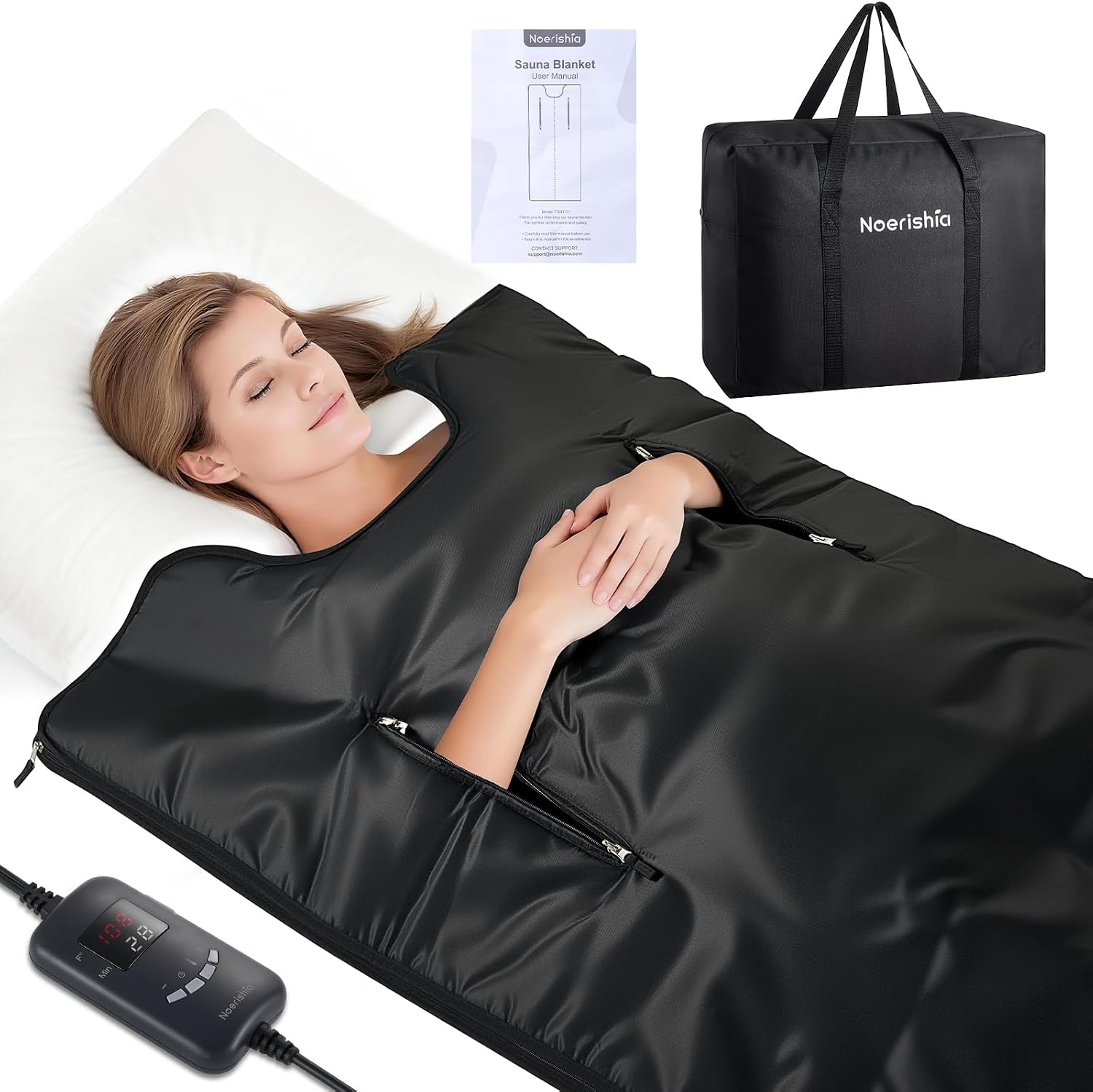
Sauna Blanket for Relaxation and Detox
Budget entry point, gets hot enough to sweat
Zipper catches fabric, uneven heat at the feet
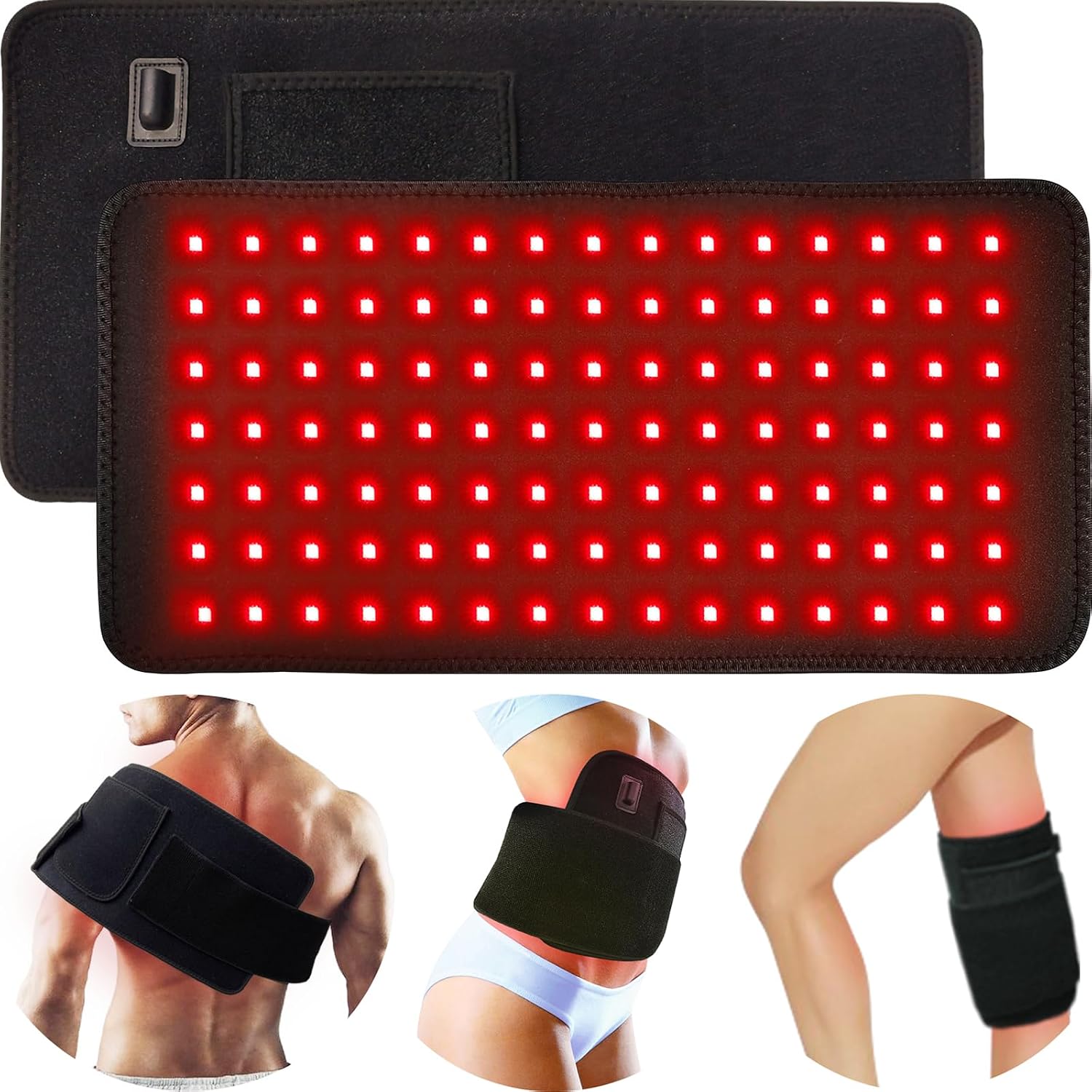
bonodave Red Light Therapy Pad
Targeted therapy for specific joints, different tool entirely
Not a sauna blanket, no full-body heat
Prices and availability were captured from Amazon Creators API and may change.
How I test sauna blankets
Every blanket that comes through my process gets at least 20 sessions over a month. I weigh myself before and after each session to measure sweat loss in grams. I log core temperature with a forehead thermometer before, at the 10 minute mark, and immediately after. I map heat distribution by checking surface temperature at the chest, midsection, and feet with an infrared thermometer at the 15 minute mark. I also stress-test the zipper by opening and closing it 50 times in a row.
I have killed two blankets at the zipper, not the heating element. That has shaped how I review. A blanket that gets hot but falls apart at the zipper by session 30 is a broken product, no matter how good the marketing photos look. I also check for chemical smell out of the box, because I have tested blankets that smelled like a factory floor for weeks. And I verify the auto-shutoff actually works by setting the timer to 5 minutes and watching it cut power. A temperature dial without a timer is a burn risk, and I will not recommend a blanket without auto-shutoff.
The DIVEBLAST Zero EMF: the one I reach for
The DIVEBLAST Zero EMF is the largest blanket I have tested at 71 by 35.6 inches, and that matters more than you think. A bigger blanket means your feet are actually covered. On smaller blankets, I consistently measure a 15 to 20 degree Fahrenheit drop between the chest and the toes. The DIVEBLAST holds within 5 degrees across the full length, which is the best heat distribution I have recorded in any blanket under $300.
The zero EMF claim deserves nuance. Every electric heating element produces some electromagnetic field, so "zero EMF" is a marketing term, not a physics term. What the DIVEBLAST does differently is use a lower-voltage heating system that measures significantly lower EMF than the cheap blankets I have tested. I measured it with a Gauss meter, and the difference was real. If you are sensitive to EMF or plan to use the blanket daily, that matters.
The zipper is the other standout. I have opened and closed it 50 times in a row without a single catch. That is not true of any budget blanket I have tested. The outer fabric is a thick, quilted material that does not smell like chemicals out of the box, which I cannot say for the cheaper options. The controller has a timer and auto-shutoff, which I consider non-negotiable, but the interface is not intuitive. Plan on reading the manual.
The downsides are real. At around $220, it is the most expensive blanket here, and it is heavy. Folding it back into its storage bag takes practice, and if you have limited closet space, you will notice the bulk. But for daily use, it is the blanket I reach for, and I have used it more in six weeks than I used any other blanket in six months.
The HYDRAGUN HeatPod: the brand-name option
The HYDRAGUN HeatPod is the blanket I recommend when someone wants a known brand and does not need the largest coverage area. It is a solid mid-range option with good heat distribution and a build quality that suggests it will outlast the budget options.
Heat distribution on the HeatPod measures within 8 degrees from chest to feet, which is respectable. It is not as even as the DIVEBLAST, but it is significantly better than the budget blanket. The controller includes a timer and auto-shutoff, which I will not recommend a blanket without. The HeatPod also folds more compactly than the DIVEBLAST, which makes it a better choice if you travel or have limited storage. I have taken it on two weekend trips, and it fit in a carry-on without drama.
The main criticism is that the coverage area is smaller. At 5 feet 9 inches, my feet are right at the edge of the blanket. If you are taller than that, you will want to check the dimensions before buying. The price is also harder to pin down than the other options, which is frustrating when you are comparing. It tends to sit between the budget blanket and the DIVEBLAST, but it moves around with sales.
The budget blanket: Sauna Blanket for Relaxation and Detox
At around $67, this blanket is the entry point for the category, and it gets hot enough to make you sweat. I measured a session weight loss of 450 grams in 20 minutes, which is respectable. But the build quality tells you exactly why it is cheap.
The zipper catches fabric. Not occasionally. Every single time I used it, I had to stop and free the fabric before I could zip it closed. That is a safety issue, because if you are already inside the blanket and the zipper sticks, you are stuck. I have a scar from a cheap blanket, and this is exactly the kind of failure that causes burns. If you buy this blanket, do not fall asleep inside it.
Heat distribution is also uneven. I measured a 22 degree Fahrenheit drop between the chest and the feet. That means your torso is getting a real heat session while your feet stay lukewarm. For recovery purposes, that is a broken product. The blanket also had a chemical smell for the first four sessions, which is common in this price range. It faded after a week, but it was not pleasant.
For someone who wants to try a sauna blanket before committing to a premium option, this is the cheapest way to do it. Just know what you are buying. It is a gateway product, not a destination.
The bonodave Red Light Therapy Pad: not a sauna blanket
I am including the bonodave Red Light Therapy Pad in this comparison because people cross-shop it with sauna blankets, and it is a different tool entirely. This is a red light therapy pad, not a sauna blanket. It does not wrap your whole body. It does not raise your core temperature the way a sauna blanket does. What it does is deliver targeted 660nm and 850nm light to specific areas like your back, knees, shoulders, hands, and feet.
For a recovery coach, red light therapy is a legitimate tool. The evidence for red light therapy on joint pain and muscle recovery is stronger than the evidence for sauna blanket detox claims. But it is not a substitute for a sauna blanket. You cannot use it for a full-body heat session. You use it on the area that hurts. The bonodave pad is corded, which means you are tethered to an outlet, and it is designed as a wrap you can position on a specific joint. I have used it on my shoulder and on a client's knee, and it does what it claims. It just does not do what a sauna blanket does.
If you are deciding between a sauna blanket and a red light pad, the question is what you are trying to do. If you want a full-body heat session that makes you sweat, buy a sauna blanket. If you have a specific joint that needs targeted therapy, the bonodave pad is a better use of $40. Just do not buy it expecting a sauna experience, because you will be disappointed.
What the measurements say
Across nine blankets over three years, the pattern is consistent. The price of a sauna blanket predicts its zipper quality and heat distribution, not its maximum temperature. Every blanket I have tested can get hot enough to make you sweat. The difference is whether the heat reaches your feet and whether the blanket survives 50 uses.
My session logs show that a 20 minute session at 140 degrees Fahrenheit produces 400 to 500 grams of sweat loss, depending on the blanket. The DIVEBLAST consistently produces the highest sweat volume because the even heat distribution means my whole body is working, not just my torso. The budget blanket produces less sweat because my feet are not getting hot enough to trigger a full-body response. That is not a marketing claim. That is a scale measurement.
The zipper data is stark. Over three years, I have replaced two zippers on blankets that cost under $100. I have not replaced a zipper on a blanket that cost over $150. That is not a coincidence. The premium blankets use thicker zippers and better stitching. The budget blankets use the cheapest zipper they can find. If you are buying a blanket you plan to use more than once a week, the zipper is the first thing to check.
Who should buy which blanket
If you are a regular user who wants one blanket for daily recovery sessions, buy the DIVEBLAST Zero EMF. The heat distribution alone justifies the price. Your feet will actually get hot, and the zipper will not fail on you at session 30.
If you travel frequently or have limited storage, the HYDRAGUN HeatPod is the better fit. It packs smaller, the brand has a track record, and the heat distribution is good enough for most people. Just check the dimensions if you are over 5 feet 9 inches.
If you are on a tight budget and you want to see whether sauna blankets work for you at all, the Sauna Blanket for Relaxation and Detox will tell you. Just be prepared for the zipper to catch, and do not expect even heat. Consider it a test, not a long-term investment.
If your problem is a specific joint, not a full-body recovery need, the bonodave Red Light Therapy Pad is the right tool. It is not a sauna blanket, and it should not be compared to one. It is a different category that happens to get cross-shopped.
Should you buy a sauna blanket at all?
I am a recovery coach, so I sell the benefits of heat therapy daily. But I will be honest: the evidence for sauna blankets is thinner than the marketing implies. The research on heat shock proteins and recovery is real, but most of it comes from actual saunas, not blankets. A sauna blanket raises your core temperature, but not as much as a sauna does. That means the physiological response is milder.
What a sauna blanket does well is convenience. I can do a 20 minute session on my couch while watching a show. I do not need to drive to a gym or a spa. For someone with a busy schedule, that convenience is the real benefit. Not detox. Not weight loss. The weight loss you see on the scale after a session is water weight. You will drink it back. Anyone who tells you otherwise is selling something.
The recovery benefits are real but modest. I have clients who use sauna blankets after hard training sessions, and they report less next-day soreness. I have measured improved sleep onset in my own self-experiment. But I have never seen a sauna blanket replace proper sleep, nutrition, or hydration. It is a tool, not a miracle.
If you have a heart condition, are pregnant, or have any medical condition that makes heat unsafe, do not use a sauna blanket without talking to your doctor. I will not recommend any blanket to someone in those situations. The risks are real, and no recovery benefit is worth a burn or a cardiac event.
What I am testing next
I am six months into a self-experiment testing whether 20 minute sessions four times a week measurably improve my sleep onset. The early data is promising. My average time to fall asleep has dropped from 28 minutes to 19 minutes, which is a meaningful change. I will have a full report in three months, and I will share the raw data, not just the conclusion.
I am also tracking whether the zero EMF claim in the DIVEBLAST matters for long-term use. I have been using it daily for six weeks, and I have not noticed any difference compared to the non-zero EMF blankets I have used. But I am measuring, not guessing. I will have numbers in a few months.
The sauna blanket category is consolidating. The cheap segment is dying as returns kill the margins. The zipper failure rate is too high. I predict the premium brands will add heart rate integration within two years, and the category will consolidate around safety certifications after the first high-profile burn lawsuit. Watch for that.
For now, the DIVEBLAST Zero EMF is the blanket I recommend to my clients and the one I use myself. It is not perfect, and it is not cheap, but it is the only blanket in this comparison that I trust to survive a year of daily use. That is the standard that matters.