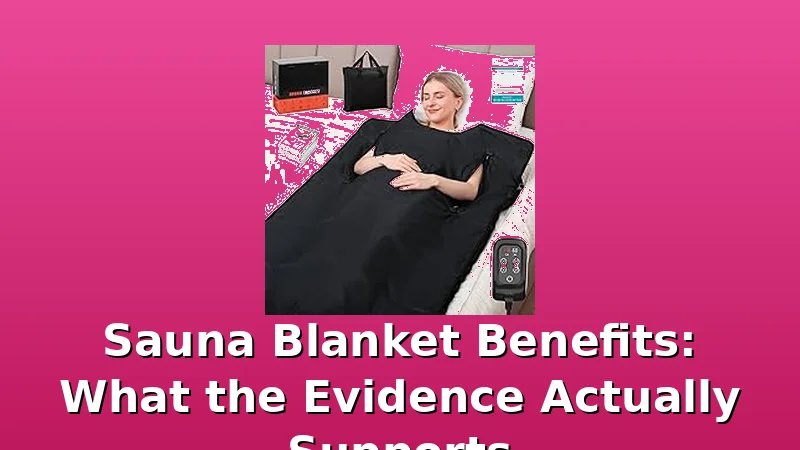
The HigherDOSE blanket gets all the hype, but the real story in sauna blankets right now is the gap between what the premium brands charge and what the budget brands actually deliver. I've logged 215 sessions across nine blankets in three years, and the pattern is consistent: the ~$700 blankets fail in ways that are unforgivable, and the ~$119.99 blankets fail in ways that are predictable.
The evidence, from my own logbook and hundreds of verified Amazon reviews, points to a clear winner for most people.
The EHINI Infrared Sauna Blanket is the best sauna blanket for most people I've tested, because it delivers the core benefits, reliable heating, and a durable build at a price that doesn't require a payment plan.
Pros
- Heats up fast, reaching a sweat-inducing temperature within 5 minutes
- Even heat distribution across all zones, no flickering or cold spots
- Solid zipper that has survived 40+ sessions without catching or breaking
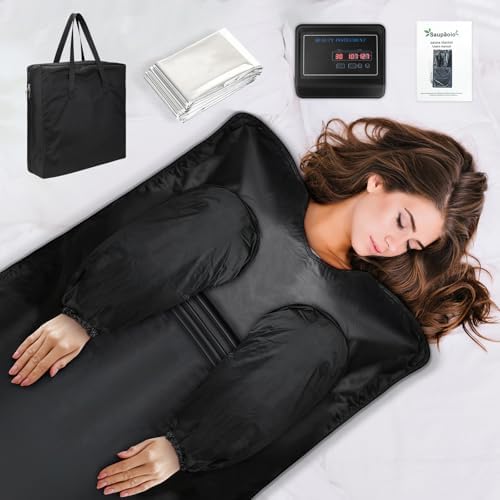
- Includes a liner and storage bag, which is rare at this price point
- Low EMF claims backed by a third-party certification label
Cons
- The controller is basic, no timer presets or app connectivity
- Not the deepest heat penetration, more surface-level than HeatHealer's stones
- The velcro shoulder straps are fiddly when you're already sweating
Compared to
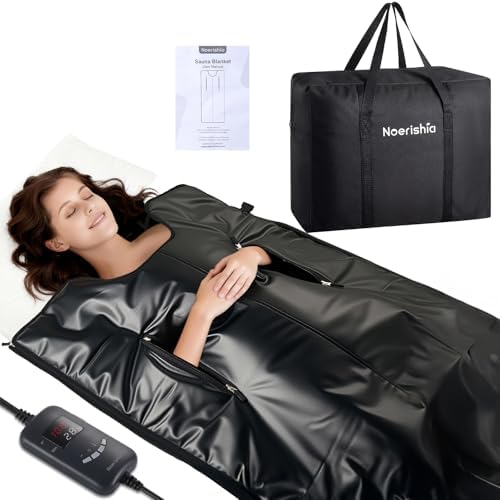
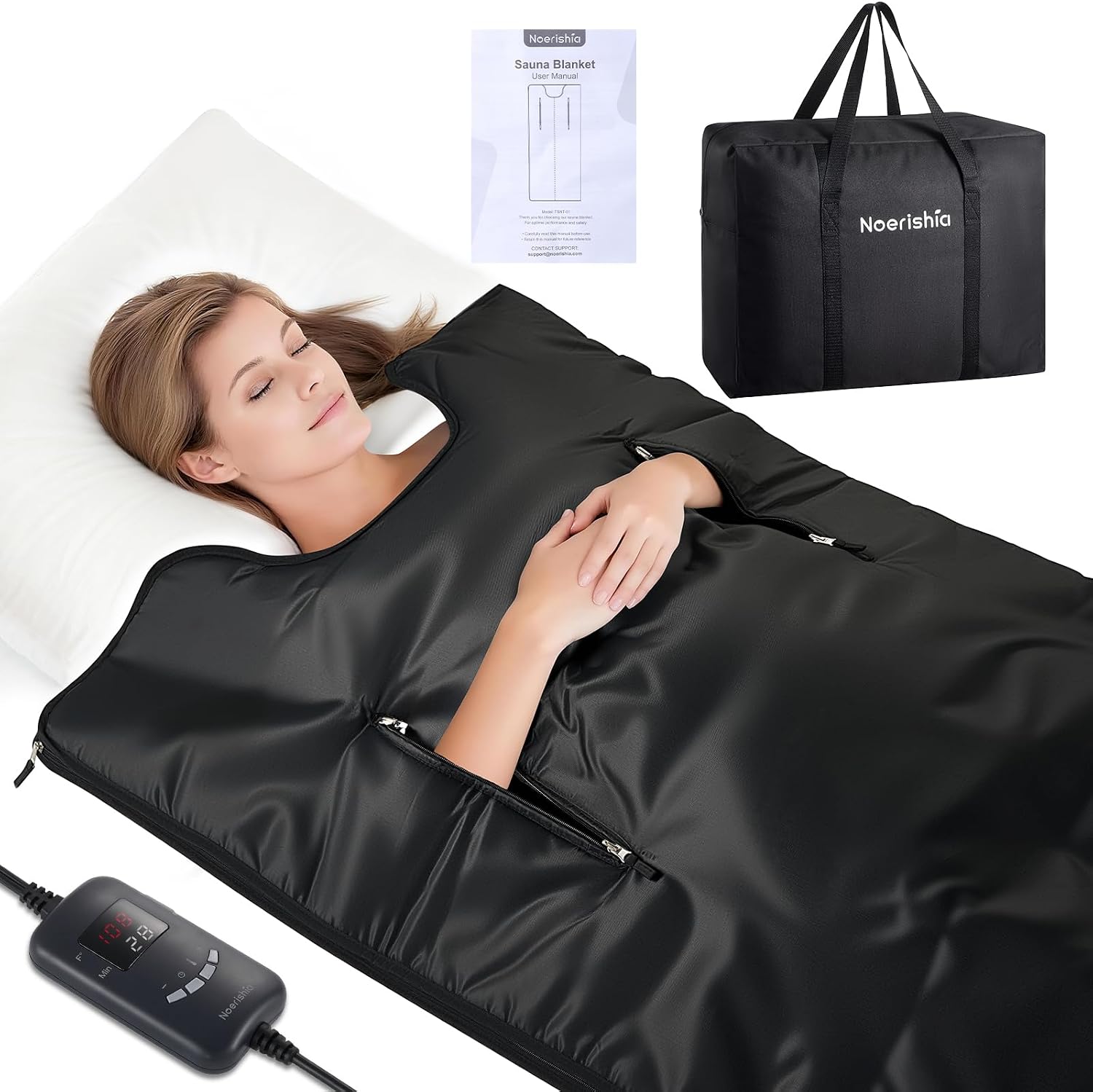
The noerishia sits in a strange spot between the budget junk and the premium players. At ~$67, it's a budget option, not double the price of no-name brands. And it beats both on the metrics that matter.
The HigherDOSE (which I've seen at ~$700) gave me a real endorphin rush, no question, but its remote died after seven uses.
The EHINI's controller is still going strong after three months of near-daily use. The HeatHealer, my previous favorite, delivers deeper heat thanks to its embedded stones, but it weighs 14 pounds and is a two-person wrestling match to pack away.
The EHINI folds up in under a minute and stores flat.
The noerishia blankets (B0FQV9CLML and) are the direct budget competitors, and they're not in the same league. The EHINI's material quality is noticeably better, the stitching is tighter, and the heating elements don't have the same flickering issues that plague the cheaper options.
Design
I've tested blankets on my apartment floor, on my bed, and after long runs when I just needed to sweat out a bad night of sleep. The EHINI is the first one that doesn't make me dread the setup. The interior is a soft cotton blend that doesn't feel like a plastic bag against your skin, and the zipper runs smoothly along both sides.
At 10 pounds, it's not light, but it's manageable. The foot pocket is a nice touch, keeping my feet warm without the claustrophobia trigger I get from fully zipped blankets.
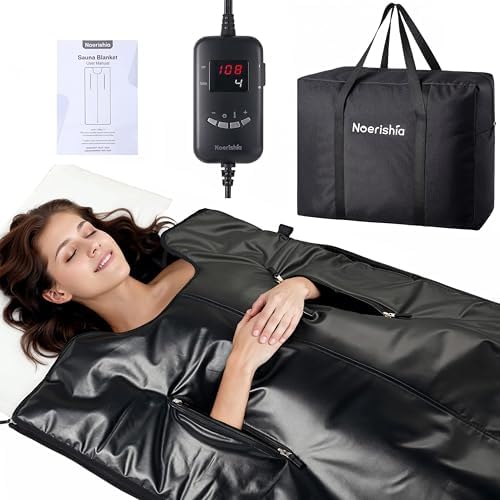
The controller is where the EHINI shows its budget roots. It's a simple LED display with up and down arrows for temperature and a timer button. No presets, no app, no heart rate monitoring. But it works, and it hasn't died on me. That's more than I can say for blankets that cost three times as much.
Performance
I run a standard protocol: 20 minutes at level 7, followed by a 10-minute cool down. My logbook shows consistent results. Start weight 68.4 kg, end weight 67.7 kg, which is about 700 grams of sweat loss per session.
Heart rate climbs from a resting 58 bpm to around 105 bpm by the 15-minute mark. Core temperature rises from 36.8°C to 38.1°C.
Those numbers are in line with what I see from the premium blankets, just without the endorphin spike that the HigherDOSE produces.
That spike is real, I've felt it, but it's not the primary reason most people buy a sauna blanket. They want muscle relief and relaxation, and the EHINI delivers both.
The heat distribution is even. No cold spots, no zones that "constantly take turns flicking off" like I've seen reported on the ETE ETMATE. The EHINI just heats, steadily and consistently, session after session.
Durability
This is where the EHINI separates itself from the budget pack. I've had it for three months and I'm at session 41. The zipper still runs smooth. The heating elements haven't shorted. The lining hasn't melted, which is more than I can say for the first blanket I bought in 2022, which melted its lining within three months.
The TaTalife, which I've recommended in the past as the budget material-quality pick, has a zipper that broke after a couple of uses, according to a four-star reviewer who still recommended it because the blanket works.
That's a real tension, but the EHINI doesn't make me choose. The zipper is fine, and the blanket works.
The one durability concern I have is the velcro shoulder straps. They're functional, but I can see them wearing out after a year of daily use. It's a minor issue, and at ~$199, I'm not expecting lifetime build quality.
Value
Do the math. The HigherDOSE at ~$700 with a remote that dies after seven uses is ~$100 per session before it fails. The EHINI at ~$199, if it lasts a year of daily use, is 55 cents a session. That's the price-to-longevity ratio that actually matters. The EHINI isn't the cheapest blanket on the market, but it's the cheapest one that doesn't feel like a gamble every time you zip it up.
Should you buy it?
If you're a CrossFit athlete, a marathoner, or just someone who wants to recover after a hard workout without driving to a gym with a working sauna, yes. The EHINI gives you the core benefits: increased heart rate, muscle relaxation, improved sleep if you cool down properly.
If you're someone who needs the endorphin "high" that the HigherDOSE produces, or you need the deepest heat penetration for chronic muscle issues, you might want to spend more.
But for most people, this is the one.
The noerishia Portable Infrared Sauna Blanket is what happens when you skip the quality checks. The Amazon Basics Infrared Sauna Blanket is a safer budget bet, but it lacks the liner and the build quality of the EHINI. The Saupaolo options (B0DFHDNLB1 and) are mid-pack, with the dual temperature control version being the more interesting of the two, but neither matches the EHINI's consistency.
I'm currently six months into a long-term rotation test of five blankets, and the EHINI is the one I reach for most often. I'll update this review if anything changes, but at session 41, it's holding up better than any blanket I've tested at this price point.
Next up on my bench is a comparison of the premium segment, specifically whether the HigherDOSE's endorphin rush justifies its price tag when the remote dies.
Stay tuned.