Most people buy a sauna blanket, use it four times in two weeks, then fold it over a chair and forget it. That pattern is not a discipline problem. It is a protocol problem. A sauna blanket recovery routine only holds together when you know which temperature to start at, how long to stay inside, what to do in the twenty minutes after, and the handful of safety rules that keep a good session from turning into a bad night.
I have been running heat sessions since 2022, when my own shoulder surgery recovery stalled and a physical therapist suggested dry heat at home instead of a forty minute drive to a gym sauna. I now coach CrossFit athletes and weekend warriors, and heat is one of four tools I hand almost everyone who walks through the door.
What follows is the protocol I actually give clients. It assumes you either own a blanket or are about to buy one, and it assumes you want the recovery and sleep benefits, not the marketing story.
Why you should trust me
I am a recovery coach in Boulder, Colorado, not a physician, and I say that up front because heat therapy sits close enough to medicine that people start treating advice like a prescription. Former competitive swimmer, now the person athletes text at 9 p.m. asking whether they should get in the heat after a heavy squat day.
I have used nine blankets over three years. I keep a logbook for every session with core temp, heart rate, sleep onset, and sleep quality, and I weigh myself before and after to measure sweat loss. The weigh-ins taught me the most useful thing I know about this category: sweat volume is the only honest metric you can pull from a blanket. Everything else is a feeling. Temperature settings, session length, and how much water you drank all show up on the scale in a way they do not show up in your memory.
The logbook taught me the second most useful thing. The zipper is the failure point, not the heating element. I have killed two blankets at the zipper and zero at the heater. That single fact should change how you shop and how you treat the one you own.
What actually matters in a blanket
Even heating beats maximum temperature every time. A blanket that hits a high number across the chest and a much lower number at the feet is a broken product, no matter what the dial claims. Heat distribution is the spec nobody prints, and it is the one your body notices. You want warmth that feels similar at your calves, your hips, and your shoulders.
Auto-shutoff is not a feature, it is a requirement. A temperature dial with no timer is a burn risk, especially for anyone who falls asleep inside. I have a scar from a cheap blanket and I will not recommend one without a shutoff.
Zipper quality is the difference between a two year blanket and an eight month blanket. Look for a zipper that glides without catching fabric, and treat it gently. Zip slowly, keep the fabric clear of the teeth, and never yank.
Construction and materials matter more than the temperature ceiling. Weighted, layered construction holds heat and spreads it. Thin single layer construction runs hot in patches. Budget materials also tend to off gas, so plan to air out a new blanket before the first session.
Cleaning should be simple. If the care instructions require a degree in textile science, the blanket will not get cleaned, and an uncleaned blanket is a smell you cannot un-smell.
The two blankets I would start with
You do not need a shelf of them. You need one that fits your budget and your risk tolerance, and you need to know what you are trading away at each price point.
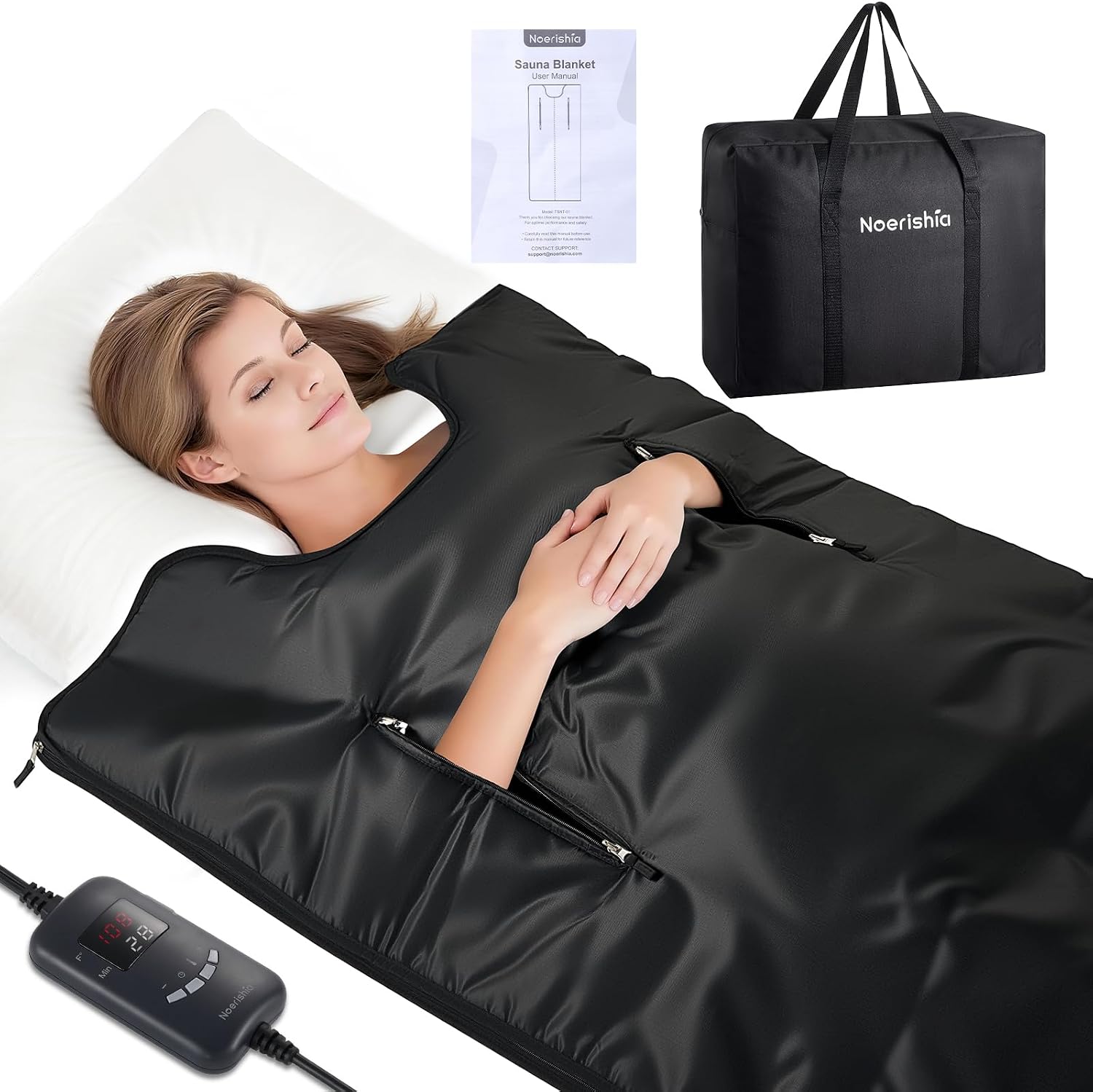
Budget pick: Sauna Blanket for Relaxation and Detox, Versatile Full Body Heating Wrap
 Visit on Amazon →
This is the entry point into the category, and the name tells you what it is built for: relaxation and full body warmth, not clinical heat therapy. I do not make detox claims and I do not repeat them, so ignore that word in the product title and judge it on the practical stuff.
Here is how I would evaluate it before you order. Confirm the controller has an auto-shutoff timer. Confirm the heat is described as even across the length of the wrap, not just a hot zone in the middle. Check what the interior is made of and whether the manufacturer tells you how to clean it without a chemistry set. If those three answers are good, this is a legitimate first blanket for someone who wants to lie on the couch, get warm, and see whether the habit sticks before spending real money.
Flaws but not dealbreakers: Budget construction means budget materials. Expect to air it out for a few days before the first session, and expect the zipper to be the part that eventually wears. Zip it slowly and it will last longer than the price suggests.
Anyone who is curious about heat therapy, wants to test whether they will actually use it four times a week, and does not want to commit premium money to an experiment will be fine here.
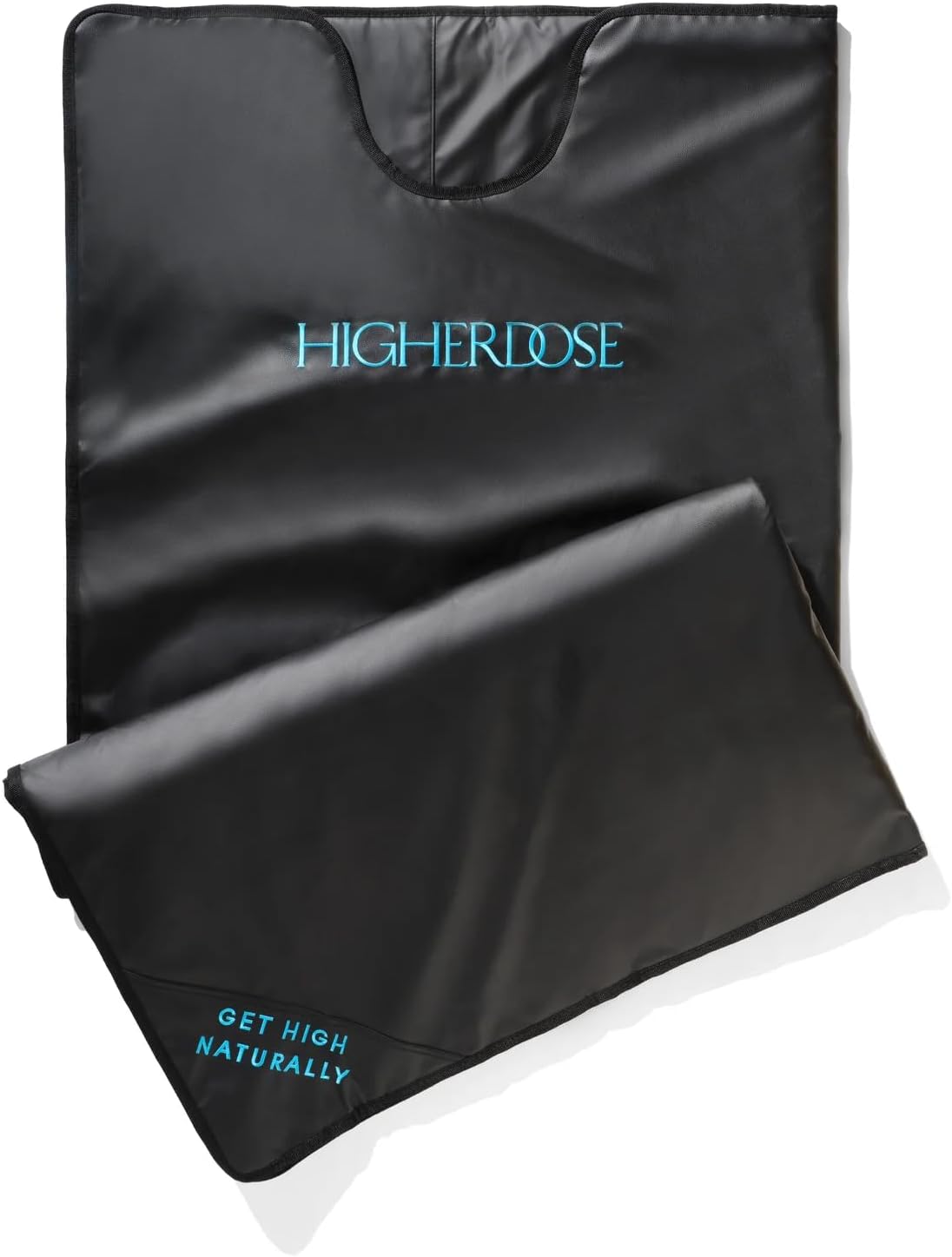
Upgrade pick: HigherDOSE Infrared Sauna Blanket with Low EMF and 9 Temp Levels
 Visit on Amazon →
This is the one I point athletes toward when they have already proven they will use a blanket consistently. Two things in the spec sheet are the reason. Low EMF construction addresses the concern people raise most often about lying inside an electrically heated wrap for twenty minutes. Nine temperature levels give you room to actually program a session instead of choosing between warm and too hot.
Nine levels matters more than it sounds. A three level dial forces you to jump in bigger steps, which makes it hard to find the setting where you sweat well without feeling cooked. Nine levels lets you start low, move up one step per session for the first two weeks, and land on a number you can repeat.
Flaws but not dealbreakers: It costs more, and it is still not a sauna. You are not getting the ritual, the community, or the steam of a real sauna room. You are getting dry radiant heat on your living room floor, and that is the honest trade.
Anyone who has been using a cheap blanket for a few months, has a routine that survived the novelty phase, and wants better heat distribution plus finer temperature control should look here first.
The session protocol, step by step
Step one: Hydrate before, not during. Drink a full glass of water twenty to thirty minutes before you get in. Drinking inside the blanket usually means you are playing catch up, and it makes the session feel worse.
Step two: Lay the blanket flat and preheat it. Give it five to ten minutes to come up to temperature with the top open. Getting into a cold blanket and waiting for it to warm around you is how people decide they hate this.
Step three: Start lower than you think. Whatever you believe your setting is, drop one level for the first week. Heat tolerance is not the same as heat benefit. You are looking for a session you could repeat tomorrow, not a personal record.
Step four: Get in with light clothing or a towel layer. Follow the manufacturer instructions on what to wear inside. A thin layer protects the interior and makes cleaning easier.
Step five: Start at 15 minutes and cap at 20. Fifteen minutes at a comfortable setting is a real session. Extend toward twenty only after you have done a week at the lower duration. If you are doing this four times a week, twenty minutes is the practical ceiling for most people.
Step six: Set a timer you can hear. Use the blanket's auto-shutoff and set a phone alarm as a backup. Falling asleep inside a heat blanket is the single most common way people get into trouble.
Step seven: Get out when the timer says, not when you feel done. The mistake is treating the last five minutes as free. Your core temp keeps climbing after you feel like you have had enough.
Step eight: Cool down gradually. Open the blanket, sit up slowly, and give yourself a few minutes before standing. Some people go straight into a cool shower. Some people just sit. Both work. Do not jump into cold water if you have any cardiovascular concern without clearing it with a doctor first.
Safety rules I do not bend
I refer pregnant people and anyone with a heart condition, a pacemaker, or a blood pressure condition to their doctor before they use any heat therapy. That is not a disclaimer, it is the whole answer.
Do not drink alcohol before a session. Do not use a blanket while dehydrated or sick with a fever. Do not use one right after a heavy meal. Do not fall asleep inside it. If you feel lightheaded, nauseated, or your heart is pounding in a way that feels wrong, open the blanket, get out, and cool down.
Heat therapy raises core temperature. That is the point of it and also the risk of it. Everything above is about keeping the dose in a range where the benefit shows up and the risk does not.
The recovery window
The session is the first half. The thirty minutes after is where the recovery benefit actually lands for my athletes.
Rehydrate with water and something containing sodium, because you lost both. I weigh in before and after every session and the scale tells me how much fluid to replace. If you do not want to weigh yourself, use a full glass of water plus a pinch of salt in food.
Then let your body cool on its own for twenty minutes before you shower, eat, or train. The heat shock protein response and the circulation changes do not stop when you step out of the blanket. Give them room.
Do not schedule a session immediately before a hard training block. Heat before a workout raises core temp before you have even started, and most people perform worse. The better slot is after training, or in the evening a few hours before bed. My own logbook, six months into a self experiment on sleep onset, points the same direction: evening sessions track with falling asleep faster, and pre workout sessions track with nothing good.
Cleaning and storage
Wipe the interior down after every session once it has cooled, following the manufacturer instructions for your specific blanket. Do not fold it while it is warm, and do not store it compressed under anything heavy. Hang it or lay it flat with the zipper open so it can dry completely. A blanket stored damp is a blanket that smells, and a blanket that smells gets used less, which defeats the entire purchase.
Questions I get every week
How many times a week? Four sessions is the number I give most people. More than that and the recovery benefit does not scale while the dehydration risk does.
Do I need to shower after? Rinse if you sweat heavily. Otherwise a cool down and a change of clothes is enough.
Is this the same as a sauna? No. It is heat therapy on your couch. Buy it for what it is and you will like it. Buy it expecting a sauna and you will be disappointed.
What this all costs over a year
A blanket is a one time purchase, which is why the cost per session math matters more than the sticker. Run four sessions a week for a year and you are at roughly two hundred sessions. Spread across a budget blanket or a premium one, that is a few cents to a few dollars per session, and you never paid for parking or drove forty minutes each way.
That math only works if you actually use it. Which brings it back to the protocol: start at fifteen minutes, start lower than you think, keep the timer honest, rehydrate after, and put it away clean. Do those five things and the blanket earns its place in the corner of your living room instead of becoming another chair.