Most people who buy a sauna blanket use it wrong for the first month. They crank the dial to the top, lie down for an hour, fall asleep, and wake up overheated and dehydrated. Then the blanket goes in a closet and stays there.
I know, because I did exactly that in 2022. I am a recovery coach in Boulder, Colorado, and heat sessions started as my own shoulder rehab and turned into part of how I work with CrossFit athletes and weekend warriors. Learning how to use a sauna blanket at home is not complicated, but it is specific. Sauna blanket safety is really four decisions: how hot, how long, what you wear, and what stops the session.
Get those four right and you own a tool you will actually use four times a week. Get them wrong and you own an expensive mat with a zipper problem.
Here is the setup I walk clients through, including the one blanket in this guide that I would hand a beginner and the small heat tool that lives next to mine.
Why you should trust me
I am not a doctor and this is not medical advice. I am a recovery coach. My clients are mostly people who train hard and sleep badly, and my job is to find small interventions that move the needle without wrecking them.
I have owned and used nine sauna blankets since 2022. Two of them died at the zipper, not the heating element, which is why I now open and close any blanket a dozen times before I trust it with a client. I weigh myself before and after every session and log the number in grams, along with session temperature, duration, heart rate, and how long it took me to fall asleep that night. I keep the logbook because sweat volume is the only honest metric in this category. Everything else is a feeling.
What I will not do is tell you a sauna blanket detoxes you, burns fat, or replaces a sauna. It does none of those things. What it does is raise your skin temperature and, over a long enough session, your core temperature, in a controlled way on your own couch. That has real evidence behind it for recovery and sleep onset. That is the whole pitch, and it is enough.
How I picked and how I tested
Two products appear in this guide and they do two different jobs. The criteria below are the ones I apply to any blanket before it gets a recommendation, and they are the criteria you should apply to anything you are considering.
Auto-shutoff is non-negotiable. A temperature dial without a timer is a burn risk. People fall asleep in these things. I have a scar from a cheap blanket that never shut off, and I will not recommend a unit that lacks an automatic cutoff, no matter how good the heat feels.
Heat distribution matters more than max temperature. A blanket that hits its top number in the chest and drops off at the feet is a broken product. Before you trust a blanket, run it empty for ten minutes and then feel it with the back of your hand at the chest, hips, and feet. If those three zones feel meaningfully different, return it.
The zipper is the failure point. Not the heating wire. I have killed two blankets at the zipper, and both had fabric that caught in the teeth on the way up. Zip and unzip it a dozen times in the first week while you can still return it.
Smell tells you about materials. A new blanket will off-gas for a few days. A blanket that still smells like a tire store after two weeks of airing out is going back.
Cleaning has to be simple. If the care instructions require a PhD, you will stop cleaning it, and then you will stop using it.
The Bitlyle blanket below is the one in this guide with the specs a beginner actually needs. The Heat It Classic is not a blanket at all. It is a small, short-duration heat tool for a different problem, and I am including it because it solves the same underlying thing at a much smaller scale: controlled heat, a short window, no medication.
Gear for your first session
You need two things before your first session: something to lie on, and something to stop the session on time. The blanket is the first. Your phone timer or the blanket's own auto-shutoff is the second.
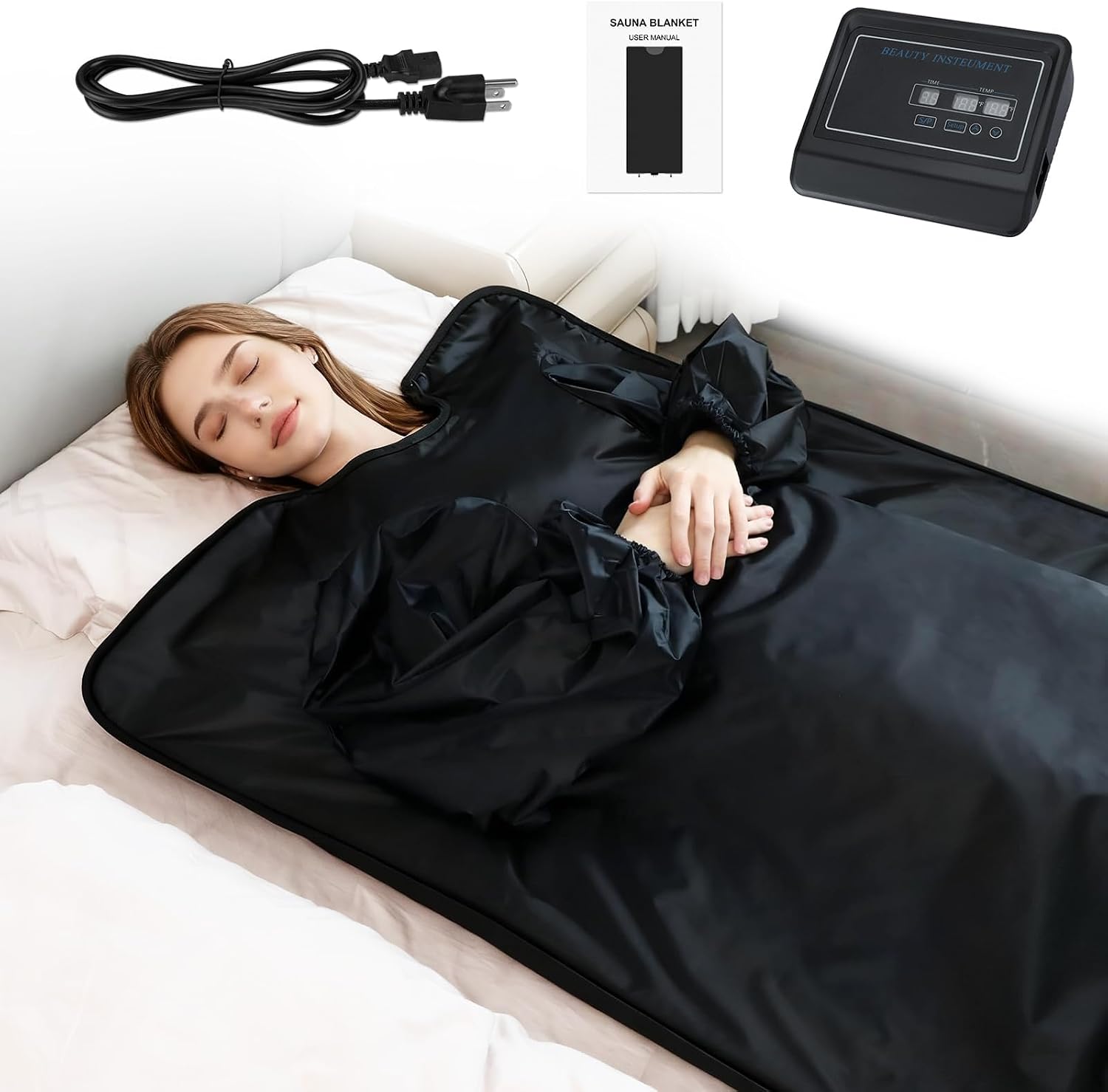
Our pick: Bitlyle Sauna Blanket with Arm Sleeves for Home Use, Portable Design for Relaxation and Detoxification Highest 176℉
 Visit on Amazon →
The two features worth paying attention to here are the arm sleeves and the stated 176℉ ceiling.
The arm sleeves are the interesting part. In a standard blanket your arms sit outside the heat or get folded awkwardly against your ribs, and after 20 minutes your shoulders are complaining about the position more than they are benefiting from the heat. Sleeves let your arms stay inside the heated envelope without you having to tuck them like a swaddled infant. For anyone using a blanket for shoulder or upper back recovery, that is a real difference, not a marketing bullet.
The 176℉ figure is the top of the dial, not the setting you start at. I want to be blunt about that, because it is the single most common beginner mistake in this category. Nobody's first session should be anywhere near the top of the range. Start at the lowest setting the unit offers, run 15 minutes, and only climb after you have done that three or four times and know how you feel an hour later.
On the "detoxification" in the product name: that is marketing language, and I would rather it were not there. Sweating does not remove toxins in any meaningful sense. Your liver and kidneys handle that. What the sweat does tell you is how hard the session was, which is why I weigh before and after.
Flaws but not dealbreakers: A portable design usually means thinner padding than a stationary setup, so if you are lying on a hard floor, put a yoga mat underneath. Check the zipper action in the first week while returns are still easy. And the temperature dial on any blanket in this class should be treated as a suggestion, not a calibration, so verify with your own hand before you commit to a session.
Check current Amazon price before you decide, and read the current listing for the manufacturer's own care instructions rather than assuming.
Anyone who wants a home heat session for recovery, and who has a couch and 20 minutes, is the right buyer for this. Anyone expecting a dry sauna experience will be disappointed, and that is not the blanket's fault.
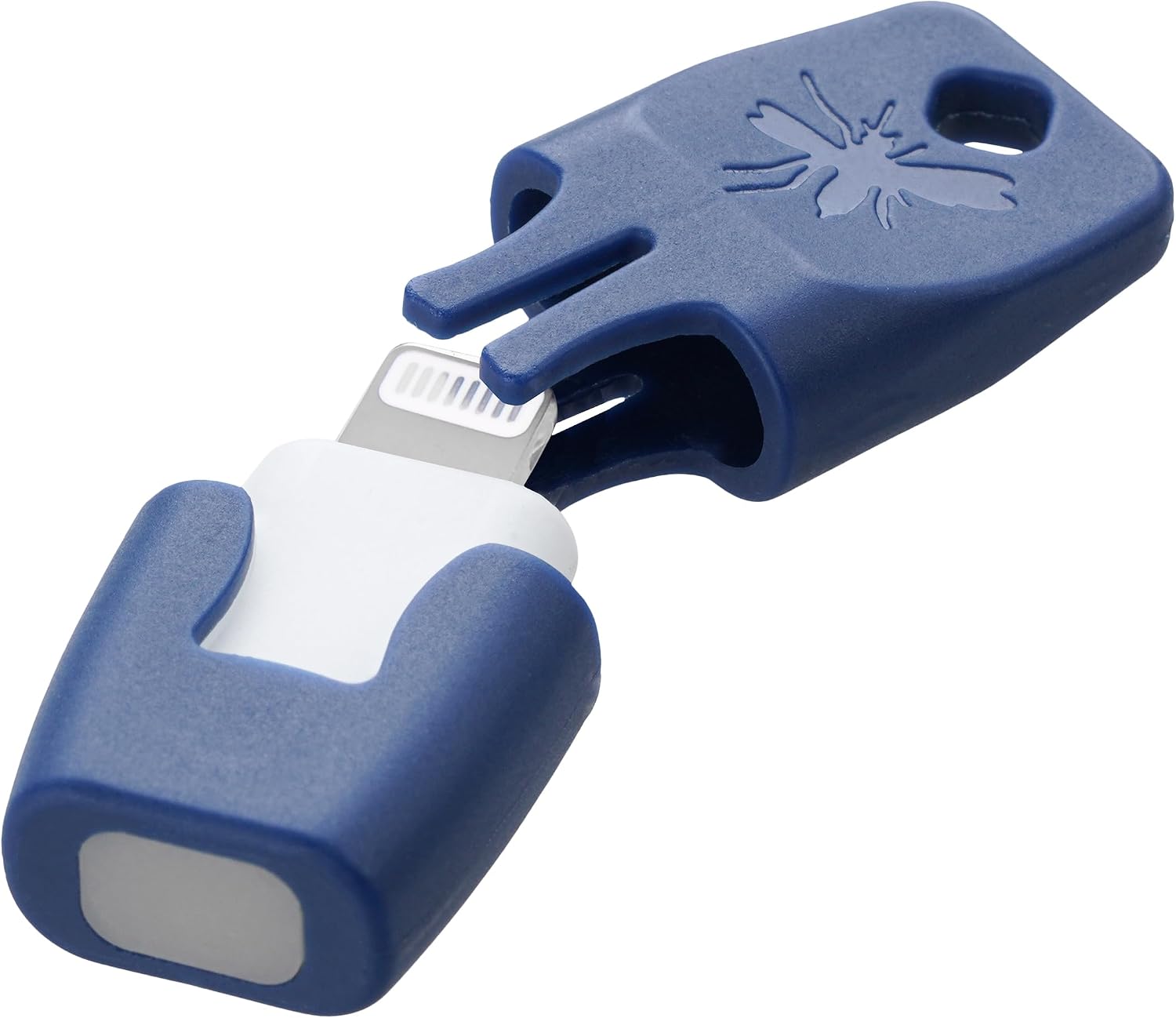
Companion tool: Appalachian Outfitters Smartphone-Powered Insect Bite Relief - Heat It Classic
 Visit on Amazon →
This is not a sauna blanket and I am not going to pretend it is. It is a small, phone-powered heat device for insect bites, and it earns a spot in this article because it applies the same principle at a scale you can hold in one hand: a short burst of controlled heat to a small area, with a hard time limit built into how it is used.
If you train outdoors, you know the problem. A ride or a trail run along the Front Range in July ends with three mosquito bites on your ankles, and by evening they are the only thing you can think about. Scratching makes it worse. Antihistamine cream works but takes a while and you have to remember where you put it. A brief heat pulse on the bite is a drug-free option that fits in a pocket next to your keys.
Where it fits in a recovery routine: after your outdoor session, before your blanket session. It is a two-minute job. It is not a substitute for the blanket, it does not help with sleep, and it will not do anything for sore shoulders.
Flaws but not dealbreakers: It draws power from your phone, so it is only as useful as your battery is. It is a single-purpose tool, and if you do not get bitten regularly you may never use it. Follow the device's own instructions on session length and do not improvise longer ones, because heat on skin is heat on skin regardless of the device.
Check current Amazon price and confirm it is compatible with your phone before ordering.
Anyone who spends real time on trails in summer and wants a bite solution that does not involve another tube of cream will get use out of this.
The session protocol, step by step
This is the version I give clients. It works on any blanket with a timer, and it is deliberately conservative for the first two weeks.
Step one: Set the timer before you get in. Set it on the blanket if it has one, and set a backup on your phone and leave the phone outside. Two alarms for one session sounds paranoid until the first time you drift off at minute 25.
Step two: Start at the lowest setting. Not the middle. Not "a little warm." The bottom of the dial. You are calibrating your own response, not chasing a number, and the first three sessions are data collection, not training.
Step three: Layers. Follow the manufacturer's instructions on whether bare skin or thin cotton is correct for your unit. A thin cotton layer is the safer default if you are unsure. No thick sweats, no plastic suits, nothing that traps more heat than the blanket already does.
Step four: Hydrate before, not during. Drink a glass of water 20 to 30 minutes before. Drinking inside the blanket means sitting up, unzipping, and letting all the heat out.
Step five: Fifteen minutes, then stop. For the first two weeks, 15 minutes is the session. After that, add five minutes at a time, and cap the whole thing at 30. Longer is not better. This is the part people get wrong, because the heat feels good and the temptation is to stay.
Step six: Head out, always. Your head stays outside the blanket. If your unit has a collar or hood, keep it open. Overheating your head is how a pleasant session turns into a bad afternoon.
Step seven: Exit slowly. Unzip, sit up, and stay seated for a minute. Standing straight up out of a hot blanket is how people get dizzy. This matters more as you get older and more if you took a hot shower immediately before.
Step eight: Cool down for 5 to 10 minutes. Get out of the heat, drink water, and let your skin temperature come down before you shower. A lukewarm shower afterward is fine. A cold plunge immediately after is a personal choice, not a requirement.
Step nine: Clean the liner and air it out. Wipe down whatever the manufacturer says to wipe down, then leave the blanket unzipped and flat until it is completely dry. Fold it only when it is dry. A damp blanket stored folded is how you get a smell you cannot get rid of.
What to track, and what the numbers mean
Session weight loss is water, not fat. I weigh before and after every session and I log the number in grams, because it is a clean, objective measure of how hard the session was. If a 20-minute session at a given setting produces 400 grams of sweat one week and 150 grams the next, something changed: hydration, room temperature, or how well you slept.
What I log:
- Temperature setting and actual duration
- Weight before and after, in grams
- How I felt at minute 10 versus minute 20
- Sleep onset that night
What I do not log: any claim about detoxification or fat loss. Those numbers do not exist, so there is nothing to write down.
If you want a single honest metric for whether a blanket is working for you, it is not sweat volume. It is sleep onset over four weeks of consistent use. That is the outcome with actual evidence behind it.
Mistakes that end the experiment
Starting at max temperature. The most common one. Heat tolerance builds over weeks, not sessions.
Falling asleep inside it. Even with auto-shutoff, this is how people get burned. If you are tired enough to fall asleep, take a nap instead and do the session later.
Skipping the timer. A dial with no cutoff is a burn risk, and a blanket you have to remember to turn off is a blanket you will eventually forget to turn off.
Wearing heavy clothing. More layers does not mean a better session, it means a faster path to overheating.
Treating it as a weight loss tool. You will lose water. You will drink it back. The scale the next morning will tell you the truth.
Never cleaning the liner. Sweat plus heat plus a folded blanket equals a smell that no amount of airing out will fix.
Ignoring who should not do this. If you are pregnant, if you have a heart condition, if you have uncontrolled blood pressure, or if you take medication that affects sweating or temperature regulation, talk to your doctor before you get in a sauna blanket. I refer those clients out and I am doing the same here.
What else is out there, and why it lost
A traditional sauna beats a blanket on heat quality, ritual, and community. It also costs a cabin build or a gym membership and 45 minutes of your day, which is exactly why so many people who love saunas do not use them often enough.
An infrared cabin sits between the two. Better heat distribution than a blanket, much bigger footprint, and a real installation.
A sauna suit is not in the same category. It traps heat without controlling it, there is no dial and often no timer, and the sweat number it produces is meaningless.
A hot bath is the closest free alternative. It raises core temperature effectively, which is why it shows up in sleep research. It also takes 20 minutes to fill, you cannot read in it comfortably, and you cannot do it in your living room while your kids are asleep.
The blanket wins on one thing: it removes every excuse. It is on your couch, it takes 60 seconds to start, and it stops itself.
What this all costs
I am not going to quote prices here, because listings move and a number in an article ages badly. Check current Amazon price on both the blanket and the bite relief tool and do the math against what you are already spending.
The frame I use with clients: compare it to the alternative you would actually buy. A monthly gym membership with sauna access, four sessions a week, is the honest comparison. Run that against a blanket you own outright and use for two years, and the per-session number gets small fast. Run it against a blanket that lives in a closet because the first session was miserable, and the per-session number is whatever you paid for one bad afternoon.
The protocol above is what decides which of those two you end up with. Start low, set two timers, keep your head out, stop at 15 minutes for the first two weeks, and write down your sleep. Everything else in this category is marketing.
Your couch is the cheapest recovery room you own. Use it like one.