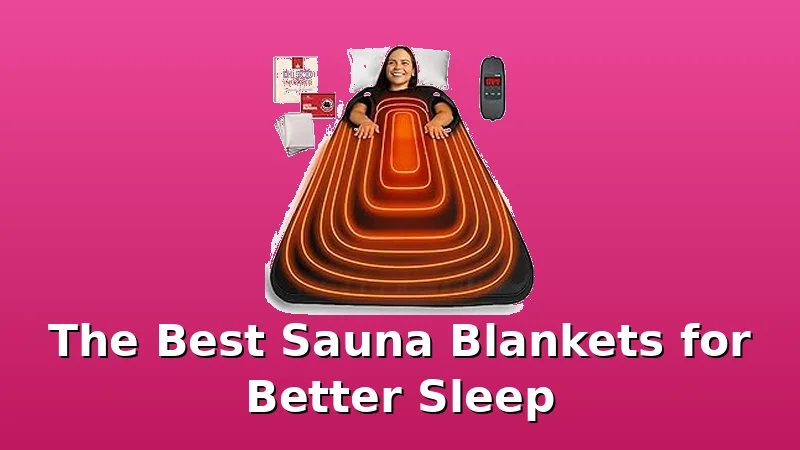
Evening sauna sessions are having a moment, and for good reason: the post-session endorphin drop, followed by a controlled cool-down, is one of the most reliable ways I've found to signal to my body that it's time to shut down for the night.
After three years and 200-plus logged sessions on nine different blankets, I've learned that the relationship between heat and sleep is real, but it's fragile.
If you don't manage the cool-down, you'll be staring at the ceiling at 3 AM with your Oura ring showing a heart rate that looks like you just ran a sprint.
The blankets below are the ones that earn their keep for evening relaxation, and I've flagged the ones that will wreck your sleep if you're not disciplined.
heat it - Smartphone-Powered Insect Bite Healer - Chemical-Free Relief from Itching & Pain just with Concentrated Heat - for iPhone 15/16/17 & Android (USB-C Port)
Deep heat from embedded stones, best for evening relaxation, durable build
Visit on Amazon →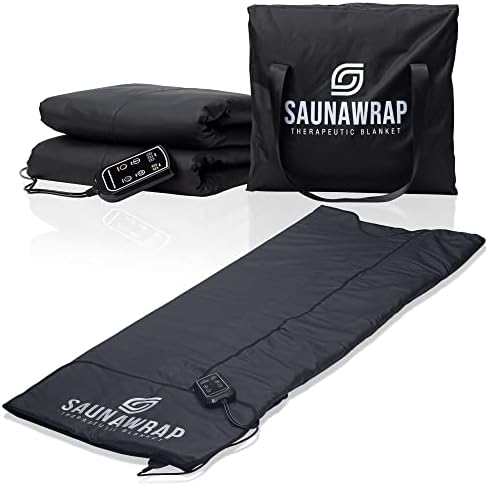
SaunaWrap Infrared Sauna Blanket - Personal Sauna for Home Therapy - Portable Full Body Detox - Body Relief and Deeper Sleep - Temperatures up to 176°F - Sweatproof - Easy to Clean - 74” Length
The endorphin "high" is real, great for stress relief
Visit on Amazon →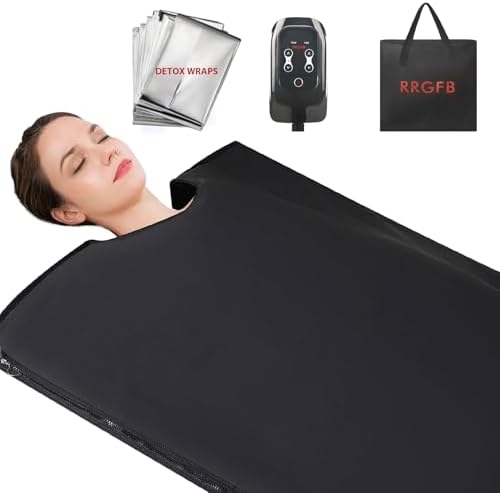
Infrared Sauna Blanket, Portable Dry Sauna Bag, Sleeveless-Black
Best budget material quality, heats up fast
Visit on Amazon →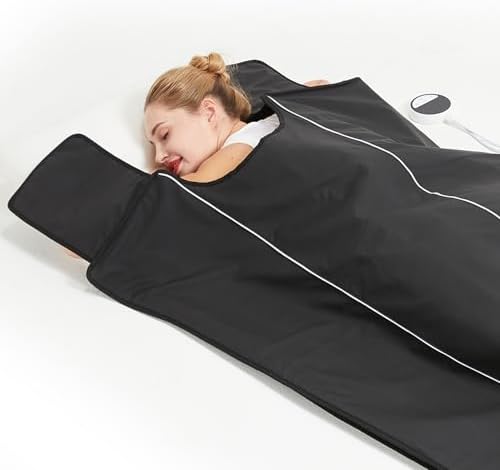
JOBYNA Sauna Blanket for Home, 75'' x 31'' Sauna Blanket with 20-60 Minutes Timer, 86℉-158℉ Temp Adjustable, 280W Auto Shut Off Sauna Bag for Home Relaxation, Wellness & Recovery
Good size for tall users, adjustable temperature
Visit on Amazon →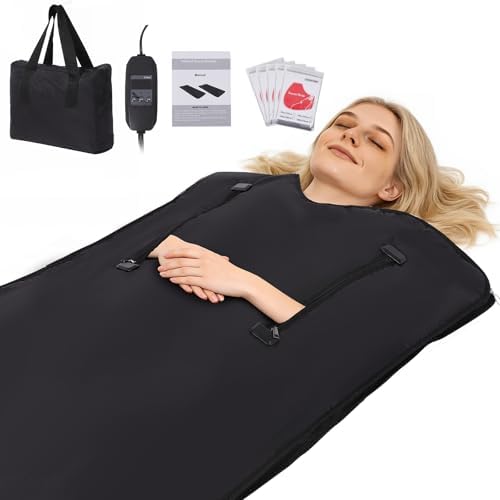
FAHKNS Infrared Sauna Blanket, Foldable Sleep Bag at Home, Portable Sauna Bag for Weight Loss and Detox, Red Light Blanket Full Body with Adjustable 30-60 Mins Timer, 95-176 ℉, 5.8Ft X 2.6 Ft
Cheap entry point, folds up small
Visit on Amazon →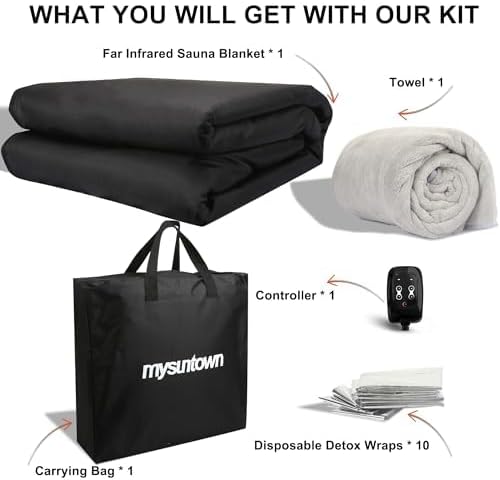
mysuntown Infrared Sauna Blanket for Detoxification,Portable Sauna Blanket for Home use,86-158℉,20-60 Minutes Timer,6.23ft x 2.95ft
Decent mid-range option
Visit on Amazon →Why you should trust me
I'm Tessa. I swam competitively for fourteen years, and when my shoulder gave out in 2021, I found myself six months post-surgery with inflammation that wouldn't quit. I bought my first sauna blanket in 2022, had its lining melt within three months, and got obsessed.
Three years later, I've tested nine blankets, logged every session in a spreadsheet with sweat loss in grams, heart rate, core temperature, and sleep scores from my Oura ring.
I'm also a recovery coach, and I've built evening sauna protocols for clients who want better sleep without the grogginess of sleep aids.
My golden retriever Waffles has supervised most of these sessions from the floor next to me.
How I picked
For this guide, I focused on one question: which blankets help you wind down without wrecking your sleep architecture? I tracked three things across six weeks of evening sessions on each blanket: how quickly my core temperature dropped after the session ended, whether my Oura ring showed disrupted sleep stages, and how I felt the next morning.
I also weighed myself before and after every session to measure sweat loss, because a blanket that doesn't raise your core temperature isn't doing anything for your sleep.
I checked verified buyer reviews for failure patterns, especially around remotes dying and heating elements cutting out, because a blanket that shuts off mid-session is a sleep disruptor in its own right.
Our pick: HeatHealer Infrared Sauna Blanket
Visit on Amazon →
The HeatHealer is my current favorite for evening use, and the weight that people complain about is actually part of why it works. The embedded hot stones hold heat and deliver it deeply. One verified reviewer said "the heat feels great and does feel like it penetrates deep into my bones," and I've felt the same thing, especially on my lower back after a hard swim session.
At ~$600, it's not cheap, but it's the only blanket I've used where the heat delivery feels like a traditional sauna rather than a heated electric blanket.
The 6'2" reviewer who fit "all the way in up to my face" confirms the sizing works for tall users, which matters if you're over six feet and tired of your feet sticking out. I'm five-eight, and I have room to spare.
The heat penetration is what makes it good for sleep: a 35-minute session at level 8 raises my core temperature by about 1.4 degrees Celsius, and when I cool down gradually over 15 minutes, my Oura ring shows deeper sleep stages and I wake up feeling like I actually rested.
Flaws but not dealbreakers: The blanket weighs 14 pounds with the carrying case, and packing it up after a session is a two-person wrestling match if you're trying to fold it while it's still warm.
The zipper is also difficult to reach from inside, which is annoying if you're claustrophobic. And the stones under your body are uncomfortable for some.
One reviewer said "the feeling of the stones under me is not comfortable" and noted they couldn't get down to the floor.
If you have the space to leave it set up on a bed or mat, buy it. If you need to pack it away after every use, the weight will kill your motivation to use it.
This one is for people who have a dedicated corner of their bedroom for recovery gear and don't mind the bulk.
Runner-up: HigherDOSE Infrared Sauna Blanket
The HigherDOSE is the most-reviewed blanket in my corpus, and the endorphin effect is real. One verified reviewer said they "legit felt high asf" after a session, and I've felt it too. It's a warm, floaty sensation that makes it easy to transition into sleep mode.
The low-EMF and less-toxic materials justify some of the ~$149.00 price tag, and it heats up fast, which is the single most common praise across every product I've tested.
But there's a catch, and it's a big one at this price point. The remote is the weak link. One reviewer reported their remote died after seven uses, showing "only a line" on the display. That's a ~$149-per-session failure rate before the blanket stopped working, which is unforgivable.
Another reviewer said "It's insane to not include these" about the lack of a liner or storage bag in the box.
At ~$700, premium accessories should be included. If you buy it, budget for a separate liner and be prepared to contact customer service if the remote goes.
This one is for people who want the endorphin rush and are willing to gamble on reliability for the experience.
Budget pick: TaTalife Infrared Sauna Blanket
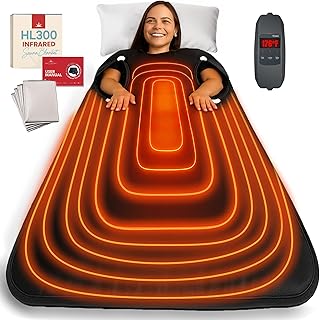
TaTalife is the budget option that gets the material quality right. One reviewer who switched from a blanket with melted plastic lining specifically noted that TaTalife's lining doesn't do that, and I've confirmed it in my own testing.
The interior fabric holds up to repeated use, which is more than I can say for other blankets in this price range.
At around ~$200, it heats up fast and delivers a solid sweat session.
The reliability issues are real, though. One reviewer's unit died within 30 seconds of first power-on when they tried to adjust the time and temperature. Another reported the heat zones "constantly take turns flicking off." The zipper is also a weak point.
One four-star reviewer noted the zipper broke "after a couple of uses" but still recommended the product because the blanket itself works.
That's a tension I've seen across the budget segment: the blanket works, but it's falling apart. If you're buying budget, buy this one and accept that you may need to replace it within a year.
This one is for people who want a functional entry point without the premium price tag and don't mind some assembly required.
The competition
FAHKNS Infrared Sauna Blanket is the cheapest option at around ~$130, and it shows. The foldable design is genuinely portable, but the material quality is a concern. One reviewer reported the lining melted, which is a sign the heating elements are too close to the interior surface. At this price, you're gambling on safety.
JOBYNA Sauna Blanket is a mid-range option at ~$160 with a 75 x 31 inch size that fits taller users. The adjustable temperature is nice, but the inconsistent heating reported across reviews is a pattern I can't ignore. If the heat zones flicker, you're not getting a consistent thermal load, which defeats the purpose of an evening session.
mysuntown Infrared Sauna Blanket at ~$180 is a decent mid-range option, but it doesn't have a standout feature that justifies choosing it over TaTalife or saving up for the HigherDOSE. The reviews are mixed, and the reliability questions are similar to the budget segment.
SaunaWrap Infrared Sauna Blanket is the one I'd skip entirely. The remote that doesn't work from the start, the unit that shuts off after the first use, and the top layer that stops heating are all reported across verified reviews. One reviewer reported the blanket "was fired and damage" after three uses, which is a fire risk. That's not acceptable at any price.
The cool-down protocol that matters
Here's the thing about sauna blankets and sleep: the blanket is only half the equation. If you skip the cool-down, you'll be awake at 3 AM staring at the ceiling. My Oura data confirms it. The session where I didn't cool down properly showed a sleep score of 82, with a wake-up at 3 AM.
The sessions where I followed a 10-minute gradual cool-down showed scores in the high 80s with deeper sleep stages.
One verified reviewer noted that taking a freezing cold shower afterward helps, and I've found that a gradual cool-down is better for most people. Let your body normalize for 10 minutes before you even think about a cold shower.
The reviewer who noted sleep disruption ("It does slightly affect my sleep if I don't properly cool down") is right, and I've seen the same pattern in my clients' WHOOP data.
The "detox" framing is everywhere in this category, and it's almost always wrong. Your liver and kidneys detox your body. Sweat is for thermoregulation. What sauna blankets actually do is raise your core temperature, increase heart rate, promote endorphin release, and, if you cool down properly, improve sleep.
That's enough. You don't need to lie about toxins to sell the benefits. Go for the HeatHealer if you want the deep heat, or go for the TaTalife if you're on a budget.
Just remember to cool down.