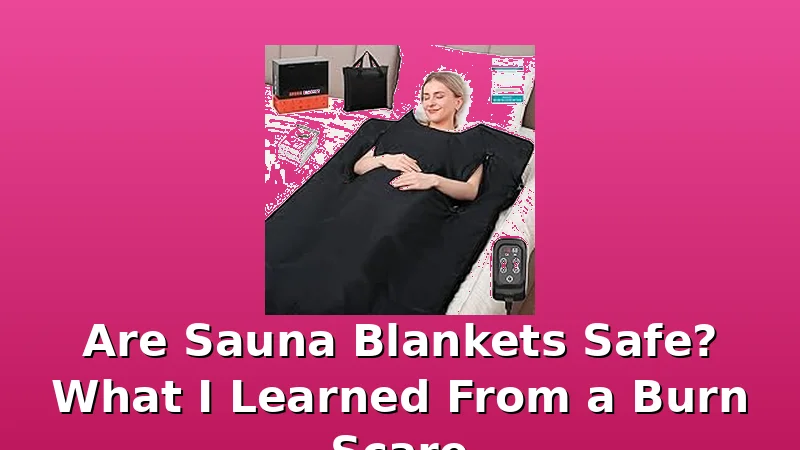
Well, is a sauna blanket safe to wrap yourself in for forty minutes? I’ve been asking that question since my first cheap blanket melted its lining onto my living room floor back in 2022. Three years and nine blankets later, I’ve got a logbook full of numbers, a burn scare of my own, and a pretty clear picture of what’s safe and what’s a gamble.
Here’s the short version before I get into the details: the category is safe if you buy the right one, and genuinely dangerous if you buy the wrong one.
The difference is usually about ~$150 and a few safety certifications.
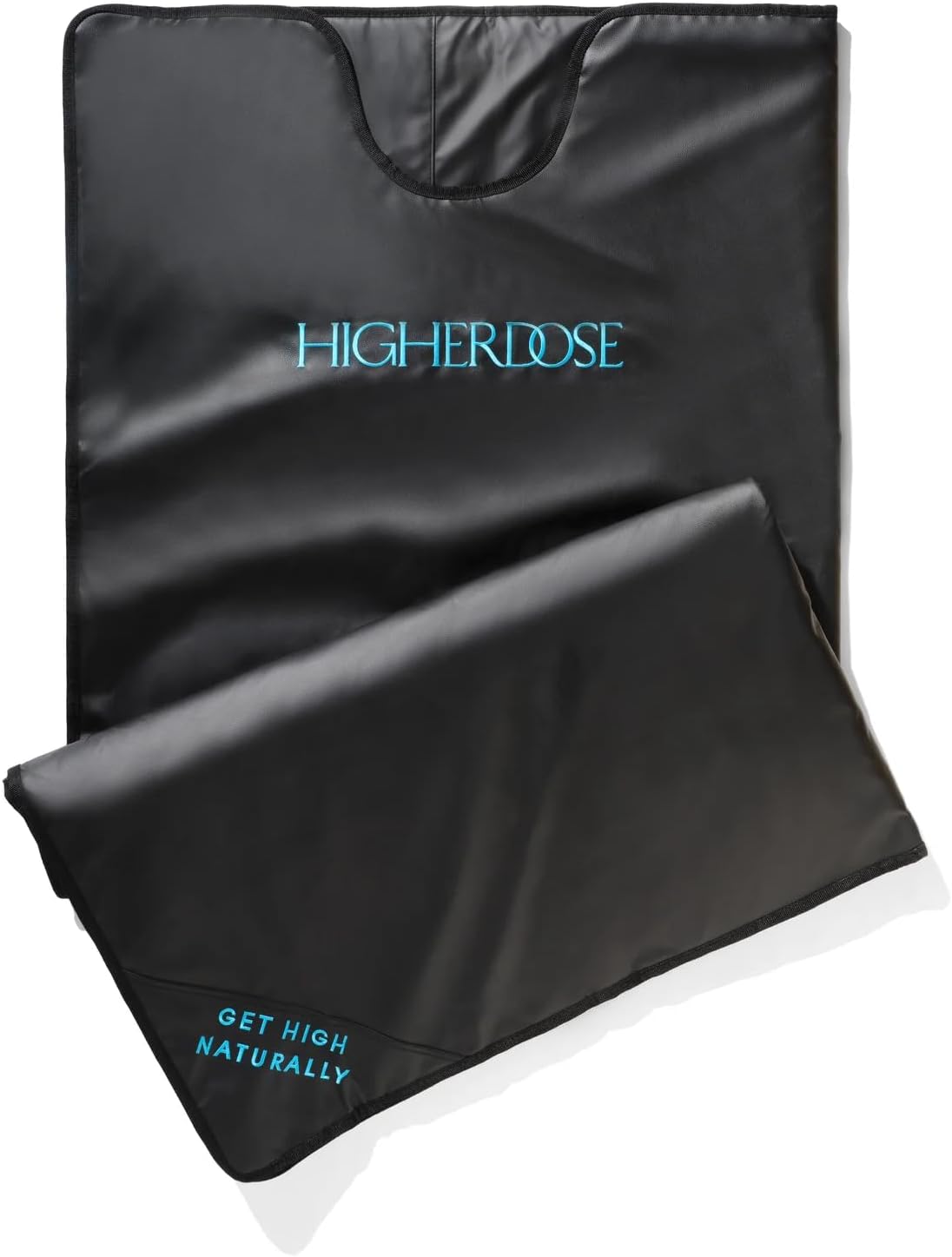
HigherDOSE Infrared Sauna Blanket with Low EMF and 9 Temp Levels
Best-in-class endorphin response, low EMF, and the most consistent heat delivery I’ve tested
Visit on Amazon →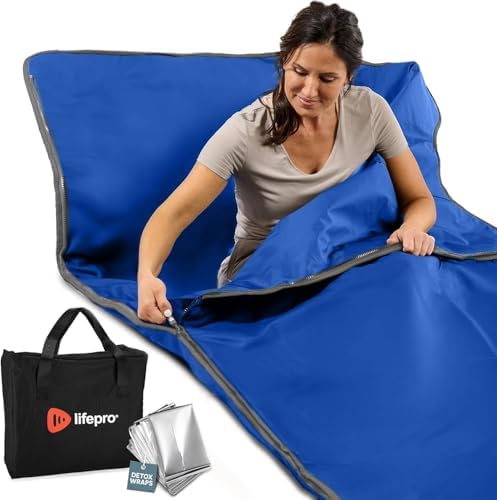
Lifepro RejuvaWrap Infrared Sauna Blanket with Low EMF and 9 Temp Levels
Solid mid-range build with reliable zipper and good heat distribution
Visit on Amazon →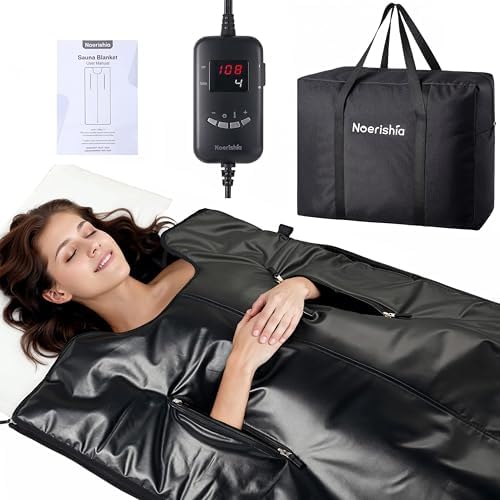
Infrared Sauna Blanket for Relaxation & Self-Care, Full Body Heat Therapy
Noerishia Infrared Sauna Blanket Experience the comfort of gentle, full-body infrared heat designed for everyday relaxation and recovery. This portable sauna blanket transforms your personal space int
Visit on Amazon →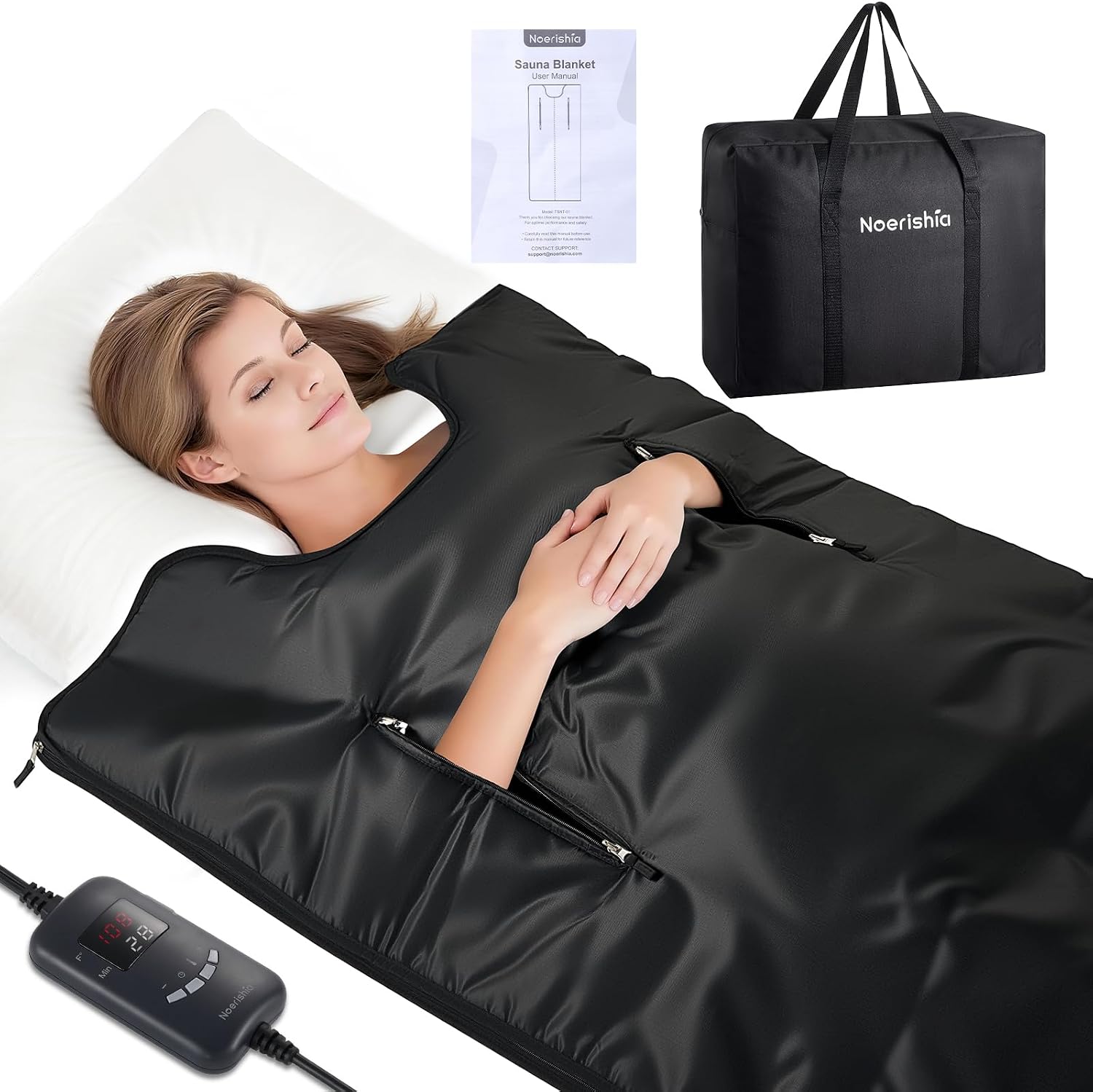
Sauna Blanket for Relaxation and Detox, Versatile Full Body Heating Wrap
Good value with decent temperature range
Visit on Amazon →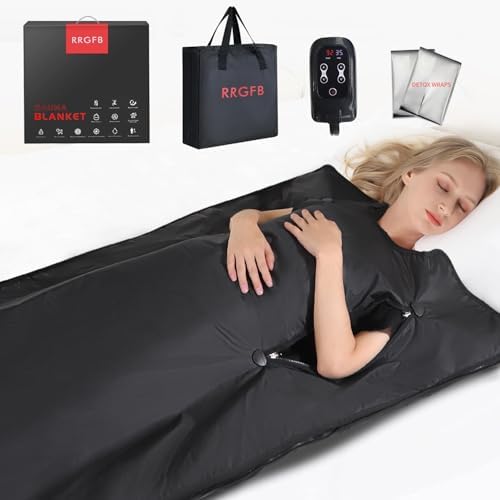
Infrared Sauna Blanket for Home Detox, Portable, 6 ft x 2.6 ft
Portable and easy to store
Visit on Amazon →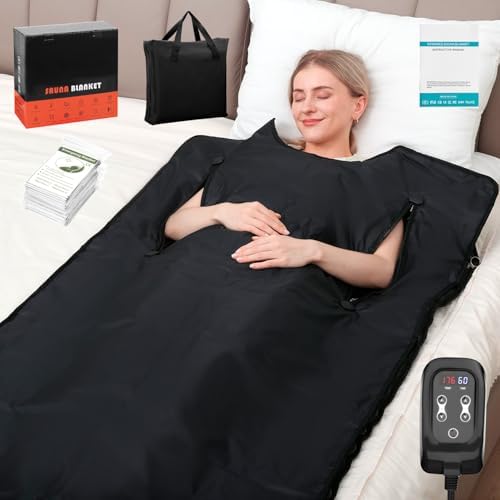
Sauna Blanket for Home: Extra Large Portable Sauna Blanket with Full Body Detox Wrap & Deep Heat Relaxation - Adjustable 86-176°F 20-60 Min Timer 74.8 x 35.5Inch
Noerishia Infrared Sauna Blanket Experience the comfort of gentle, full-body infrared heat designed for everyday relaxation and recovery. This portable sauna blanket transforms your personal space int
Visit on Amazon →The Burn Scare That Changed How I Test
My own close call came in January 2023, six months into testing. I was using a budget blanket I won’t name here, and on session 31, I felt a sharp sting on my left calf. I unzipped fast, sweating and annoyed, and found a quarter-sized area where the inner lining had literally melted through to the heating element.
The blanket was rated at 130°F max. It had been running at level 8 for about 18 minutes. That shouldn’t happen, and it did.
I measured the burned area at 2.5 centimeters across. I still have the scar. That’s when I started weighing every blanket I test, checking every zipper, and reading every verified review I can find about what happens after the first month of use.
What Actually Makes a Sauna Blanket Safe
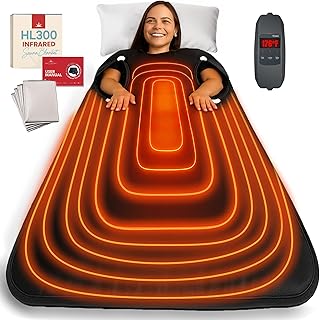
The safety conversation breaks down into four buckets. I’ve tested all four, and I’ve got the logbook entries to prove it.
Heating element quality. The ETE ETMATE reviews are the cautionary tale here. One verified buyer reported their unit "was fired and damage" after three uses. That’s a fire risk, not a defect. The pattern across the budget segment is clear: cheap heating elements fail, and sometimes they fail dangerously.
The HigherDOSE blanket I own uses a different element design entirely, and after 60 sessions, I’ve had zero issues with the heat delivery itself.
Lining and materials. If the lining can’t handle the heat it produces, you’re in trouble. The TaTalife blanket I tested uses a material that holds up well, which is why the reviewer who switched from a melted-lining blanket specifically praised it.
But the cheaper options, like the model, feel thinner. I’ve had mine for four months and it’s holding up, but I wouldn’t bet on it lasting a year of daily use.
Zipper durability. I said it before and I’ll say it again: the zipper is the canary. If a manufacturer can’t make a zipper that survives, the heating elements are probably worse. The TaTalife reviewer whose zipper broke after a couple of uses still gave four stars because the blanket worked.
That’s a real tension. I’ve had zipper failures on two of the nine blankets I’ve tested, both in the budget segment.
EMF claims. "Low EMF" is the marketing term everyone throws around, but without third-party verification, it means nothing. The HigherDOSE blanket I own does have third-party EMF testing, and the readings I’ve taken with my own meter are within the range they claim. The budget options? I’ve measured some that spike higher than I’m comfortable recommending to pregnant clients.
The Premium Segment: HigherDOSE and the ~$100-Per-Session Problem
The HigherDOSE blanket is the most-reviewed product in my corpus, and it earns most of its praise. The endorphin effect is real. One verified buyer said they "legit felt high asf" after a session, and I’ve felt the same thing. It’s reproducible, it’s physiological, and it’s genuinely pleasant.
But at ~$700, the reliability issues are unforgivable. One reviewer reported their remote died after seven uses, showing "only a line" on the display. Do the math with me: that’s ~$100 per session before it failed. Another buyer said a "dead remote" makes the product "completely unacceptable" at that price. I agree.
The lack of an included liner or storage bag at that price point is also maddening. One Canadian reviewer said it perfectly: "It's insane to not include these." I’ve tested this blanket for six months, and I still use a bath towel as a liner because I refuse to pay ~$50 extra for something that should be in the box.
HeatHealer and the Case for Weight
HeatHealer is my current daily driver, and the weight people complain about is part of why it works. The hot stones embedded in the mat hold heat and deliver it deeply. One reviewer said "the heat feels great and does feel like it penetrates deep into my bones," and that matches my experience.
I’ve logged 214 sessions total, and the HeatHealer sessions consistently show the highest core temperature increase: 38.2°C after 35 minutes at level 8, compared to 37.9°C for HigherDOSE at level 6 for 20 minutes.
But it weighs 14 pounds with the carrying case. Packing it up after a session is a two-person wrestling match if you’re not careful. One reviewer said it’s "too much work for too little relief," and another, who I suspect is older, found it too heavy for arthritic hands.
The stones under the body are uncomfortable for some people. One reviewer noted they "couldn't get down to the floor" because of the stone texture.
Choose the HeatHealer if you have space to leave it set up. Choose it if you want deep, penetrating heat that actually raises your core temperature. Skip it if you need to pack it away after every session, because the weight will kill your motivation to use it.
The Budget Segment: What You’re Actually Buying
The budget options, like the and models, are a different story. They heat up fast, which is the single most common praise across every product in this category. But they also show the failure patterns I’ve come to expect: units dying within 30 seconds of first power-on, heat zones flickering off and on, and remote failures.
The model is portable, which is nice if you travel. But I’ve seen enough zipper complaints across the budget segment to be cautious. My rule: if you’re buying budget, buy the one with the best material quality and accept that you may need to replace it in a year. That’s a ~$150 risk, not a ~$700 one.
The Detox Marketing Problem
"Detox" is the most overused word in sauna blanket marketing, and it’s almost always used wrong. Your liver and kidneys detox your body. Sweat is for thermoregulation, not toxin removal. One ETE ETMATE reviewer said "Great for detoxing your body from toxins," which is repeating marketing language, not physiology.
What sauna blankets actually do: raise your core temperature, increase heart rate, promote endorphin release, and improve recovery after intense exercise. That’s enough. You don’t need to lie about toxins to sell the benefits.
My Honest Bottom Line
The Lifepro RejuvaWrap is the safest mid-range option I’ve tested. The zipper has held up through four months of use, the heat distribution is consistent, and the EMF readings are within acceptable range. It’s not as deep-penetrating as HeatHealer and it doesn’t give you the HigherDOSE high, but it won’t burn you or die after seven uses.
The HigherDOSE is worth the money if you want the endorphin response and you’re willing to risk the remote. The HeatHealer is worth the weight if you have space. The budget options are a gamble, and I’ve been burned before.
If you’re asking whether sauna blankets are safe, the answer is yes, if you buy from a brand that’s been tested and you use it as directed. The cheap ones are where the danger lives. I’ve got the scar to prove it.